Water Damage Norwich: What the First 48 Hours Mean for Your Kansas Home’s Structure and Budget
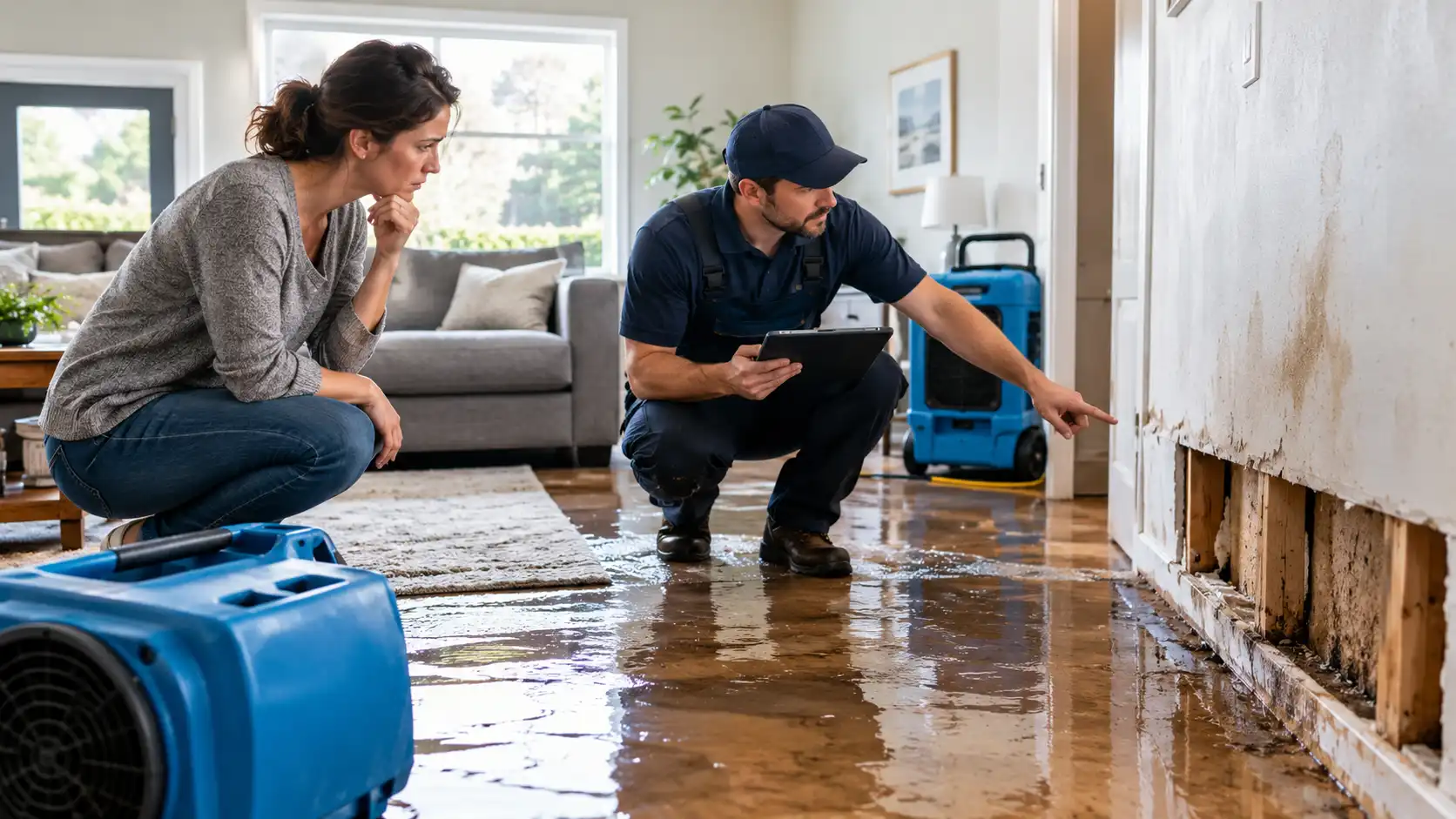
Every hour standing water sits on your floor, it wicks deeper into drywall, subfloors, and wood framing. That is the core challenge with water damage Norwich property owners face: the visible puddle is rarely the real damage. The real damage is the moisture you can’t see, hiding behind baseboards and under flooring. If it isn’t dried to industry standards, it becomes mold, rot, and a much bigger repair bill.
At Topeka Water Damage Restoration, our IICRC-trained crews have spent years pulling water out of Kansas basements after flash floods, severe storms, and frozen winter pipes. This article covers what we know from the field: how to classify the water, how long materials take to dry, what mitigation actually costs, and the steps that protect your home right now.
Key Takeaways
- Act within 24 to 48 hours. Mold can begin growing on wet materials in that window, and clean water can turn into contaminated water after about 48 hours.
- Standard homeowners insurance usually excludes flood damage. Sump pump failures also need a separate water backup endorsement, so check your policy before storm season.
- Dry to a measured standard, not a feeling. Surfaces can feel dry while framing and subfloors still hold enough moisture to grow mold. Professional moisture meters confirm when drying is done.
What the June 2026 Topeka Flood Taught Kansas Homeowners

In early June 2026, torrential rainfall dumped so much water so quickly that basements across Topeka flooded within hours. Local news coverage reported that power outages knocked out sump pumps citywide, leaving homes with no defense. One local restoration company fielded more than 100 flooding calls in a single day and estimated four times that many properties were affected.
The costs stung. Restoration jobs from that storm averaged around $5,800, according to one local restoration company. Many homeowners learned the hard way that their policies did not cover flood or sump pump backup.
On recent emergency mitigation calls in Topeka, we saw the same pattern again and again. The pump was fine; the power was not. That same chain of failures drives most water damage Norwich calls we take after heavy spring and summer storms.
| June 2026 Storm Factor | What Happened | Lesson for Your Home |
|---|---|---|
| Rainfall intensity | Heavy rain fell in a very short window | Gutters and downspouts overflowed fast |
| Power outages | Sump pumps stopped running | Install a battery backup or water-powered backup pump |
| Call volume | 100+ calls to one company in a day | Book help early; crews fill up fast |
| Average cost | About $5,800 per job | Review flood and water backup coverage now |
| Commercial impact | Warehouses and businesses flooded | Businesses need a written emergency response plan |
Why Water Damage Spreads Faster Than You Think
Water moves in three directions: down, out, and up. Gravity pulls it down through flooring seams. Capillary action pulls it up into drywall, sometimes 12 to 24 inches above the waterline.
Most water damage Norwich homeowners call about started small. A supply line drips behind a washer. A water heater weeps for weeks. Then someone notices a musty smell or soft spots in the floor.
Our extraction crews frequently see this in older Kansas homes. Plaster walls, original hardwood, and uninsulated crawl spaces hold moisture longer than modern materials. That is why professional water damage restoration focuses on hidden moisture, not just the standing water you can see.
The Damage Timeline
| Time After Water Event | What Happens Inside Your Home | Risk Level |
|---|---|---|
| 0 to 1 hour | Water spreads across floors, soaks carpet and baseboards | Moderate |
| 1 to 24 hours | Drywall swells, furniture stains, odors start | High |
| 24 to 48 hours | Mold can begin growing; clean water may degrade | Very high |
| 48 hours to 1 week | Wood warps, mold colonies spread, bacteria grow | Severe |
| 1 week and beyond | Structural damage, major mold, health concerns | Critical |
IICRC Water Damage Categories (1 to 3)
The IICRC S500 Standard sorts water by contamination level. The category decides what we can save, what must go, and what protective gear our technicians wear.
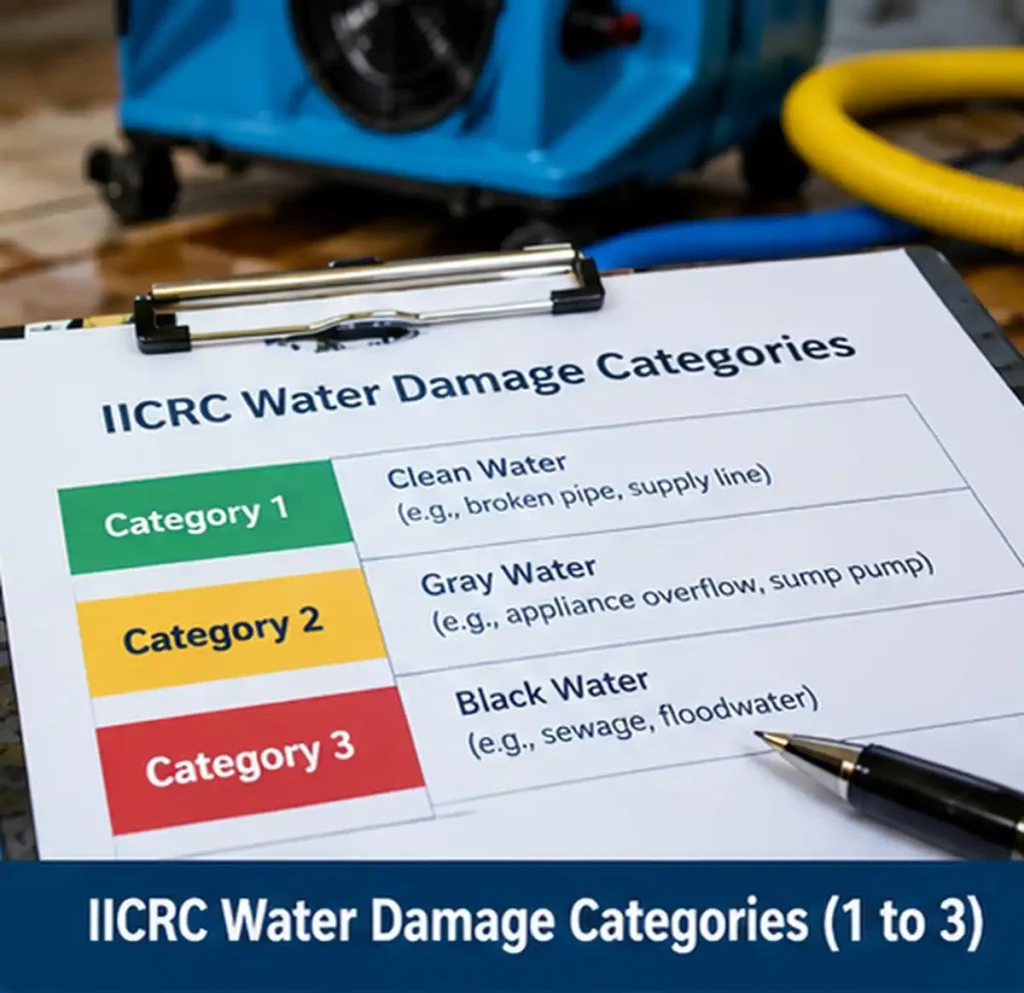
Correct classification is the first decision on any water damage Norwich job.
| Category | Common Name | Typical Sources | Health Risk | What Can Usually Be Saved |
|---|---|---|---|---|
| Category 1 | Clean water | Broken supply lines, sink overflows, rainwater from above | Low | Most carpet, pad, drywall, and furniture if dried fast |
| Category 2 | Gray water | Washing machine discharge, dishwasher leaks, toilet overflow (urine only) | Moderate | Carpet sometimes; pad usually replaced |
| Category 3 | Black water | Sewage backups, river or surface floodwater, toilet overflow with feces | High | Porous materials are typically removed and discarded |
Important: Categories can get worse over time. Clean water left sitting for 48 hours can become Category 2. Gray water left untreated can become Category 3. Floodwater from outside is always treated as Category 3 because it carries soil, bacteria, and chemicals.
IICRC Water Damage Classes (1 to 4)
The class measures how much water soaked in and how hard it will be to dry. It tells us how many air movers and dehumidifiers your home needs.
| Class | How Much Is Wet | Example | Drying Difficulty |
|---|---|---|---|
| Class 1 | Small area, low-absorbency materials | A leak that wet part of a vinyl floor | Easiest |
| Class 2 | Whole room; water wicked up walls under 24 inches | Burst pipe soaking carpet and lower drywall | Moderate |
| Class 3 | Water came from above; ceilings, walls, and floors saturated | Roof leak or upstairs overflow | Difficult |
| Class 4 | Specialty drying; dense materials hold deep moisture | Soaked hardwood, concrete, plaster, or brick | Most difficult |
Immediate Steps to Take When Water Hits Your Home
Safety comes first. Standing water plus electricity is a deadly mix. Follow flood safety guidance from the American Red Cross before you step into a flooded space.

Do This First
- Shut off power to affected areas at the breaker, but only if you can reach the panel without standing in water.
- Stop the water source. Close the main shutoff valve for plumbing leaks.
- Get people and pets out of flooded rooms, especially with sewage or floodwater.
- Take photos and video of everything before you move or toss anything. Your insurance claim depends on it.
- Call your insurance company to open a claim and ask about your coverage.
- Move valuables like documents, electronics, and photos to a dry, upper floor.
- Lift furniture onto foil or wood blocks to prevent staining and wicking.
- Call a professional restoration team for extraction and structural drying.
What NOT to Do
- ❌ Don’t use a household vacuum to pick up water. It’s a shock hazard.
- ❌ Don’t turn on ceiling fans or lights in rooms with wet ceilings.
- ❌ Don’t walk through Category 3 water without boots and gloves.
- ❌ Don’t lay down new flooring until moisture readings confirm the subfloor is dry.
- ❌ Don’t assume a fan and an open window will dry framing. They rarely do.
Drying Times by Material
Different materials hold water differently. Drywall can dry in days, while hardwood and concrete can take weeks. The table below shows typical timelines with professional equipment running around the clock.
| Material | Typical Professional Drying Time | Can It Be Saved? | Structural Risk If Left Wet |
|---|---|---|---|
| Drywall | 2 to 4 days | Yes, in Category 1 if caught early | Crumbling, mold behind walls |
| Carpet | 1 to 3 days | Often yes in Category 1 | Delamination, odors |
| Carpet pad | Usually replaced | Rarely in Category 2 or 3 | Bacteria and mold growth |
| Hardwood flooring | 5 to 14+ days | Sometimes, with specialty drying mats | Cupping, buckling, rot |
| Plywood / OSB subfloor | 3 to 7 days | Yes if not delaminated | Swelling, sagging floors |
| Framing lumber | 3 to 7 days | Yes in most cases | Rot, weakened support |
| Concrete slab / basement floor | 3 to 10+ days | Yes | Efflorescence, flooring failure |
| Plaster walls | 5 to 10 days | Often yes | Cracking, loss of bond |
| Fiberglass insulation | Usually removed | Rarely | Holds water against framing |
| Brick / block foundation walls | 5 to 14 days | Yes | Freeze-thaw cracking in winter |
If you’ve ever dealt with a flooded basement in Shawnee County, this drying strategy makes complete sense. We pull the bulk water out first with truck-mounted or portable extractors. Fast emergency water extraction removes far more moisture than air movers ever could. That single step can cut drying time by days on a typical water damage Norwich basement.
How We Know It’s Actually Dry
We don’t guess. Our technicians take moisture readings in wet areas and compare them to dry reference readings from unaffected parts of your home. Drying is complete when those numbers match. We log readings daily so you and your insurance adjuster have proof.
Our Step-by-Step Restoration Process
Transparency matters when your home is torn up.
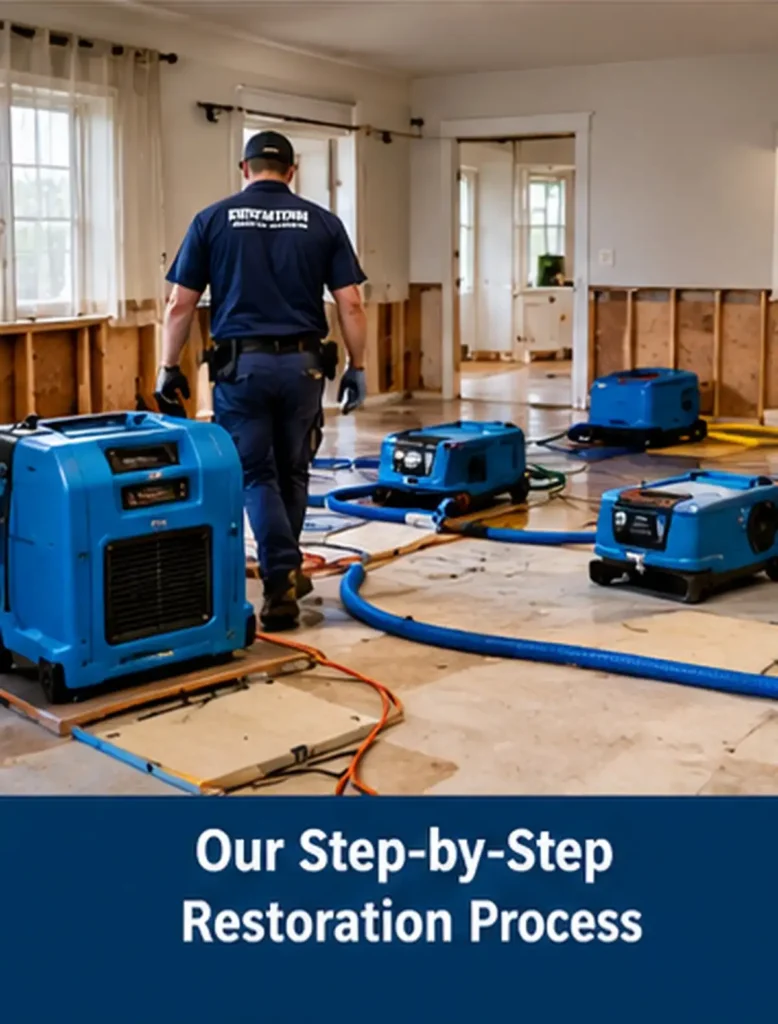
Here is exactly what happens from the first call to the final walkthrough.
| Step | What We Do | Typical Timeline |
|---|---|---|
| 1. Phone assessment | Ask about the source, size, and water type | Minutes |
| 2. On-site inspection | Moisture mapping, category and class assessment | Day 1 |
| 3. Water extraction | Remove standing water with pro extractors | Day 1 |
| 4. Removal of damaged materials | Cut out wet pad, flood-cut drywall if needed | Day 1 to 2 |
| 5. Cleaning and sanitizing | Apply antimicrobial treatment to affected areas | Day 1 to 2 |
| 6. Structural drying | Place air movers and dehumidifiers, monitor daily | Days 2 to 5 (longer for Class 4) |
| 7. Final moisture verification | Confirm readings match dry standards | Day 3 to 7 |
| 8. Repairs and rebuild | Drywall, paint, flooring, trim | 1 to 4+ weeks |
| 9. Written follow-up | Summary of work done and readings logged | After completion |
Mitigation vs. Full Restoration: What’s the Difference?
Homeowners often mix these terms up. Mitigation stops the damage from getting worse. Restoration puts your home back the way it was. Knowing the difference helps you read estimates and insurance paperwork on water damage Norwich projects.
| Factor | Water Mitigation | Full Restoration |
|---|---|---|
| Goal | Stop further damage | Return home to pre-loss condition |
| Main tasks | Extraction, demolition of wet materials, drying | Drywall, flooring, paint, cabinets, trim |
| When it starts | Immediately, ideally within hours | After drying is verified |
| Typical duration | 3 to 7 days | 1 to 6+ weeks |
| Equipment | Extractors, air movers, dehumidifiers, meters | Construction tools and materials |
| Structural risk if skipped | Mold, rot, warped framing | Unfinished, unsafe living space |
| Insurance role | Often required to prevent claim denial | Covered based on policy terms |
Pros and Cons of Handling Both With One Company
Pros:
- ✅ One point of contact from extraction to final paint
- ✅ No gap between drying and rebuild
- ✅ Consistent documentation for your insurance claim
- ✅ Crews already know what’s behind your walls
Cons:
- ⚠️ Fewer competing bids on the rebuild phase
- ⚠️ You should still review the scope of work line by line
Our advice is simple: ask any company for itemized, written estimates. That applies to us too.
Common Sources of Water Damage in Kansas Homes
Kansas weather hits hard in every season. Spring storms, summer flash floods, and January deep freezes each bring their own risks.
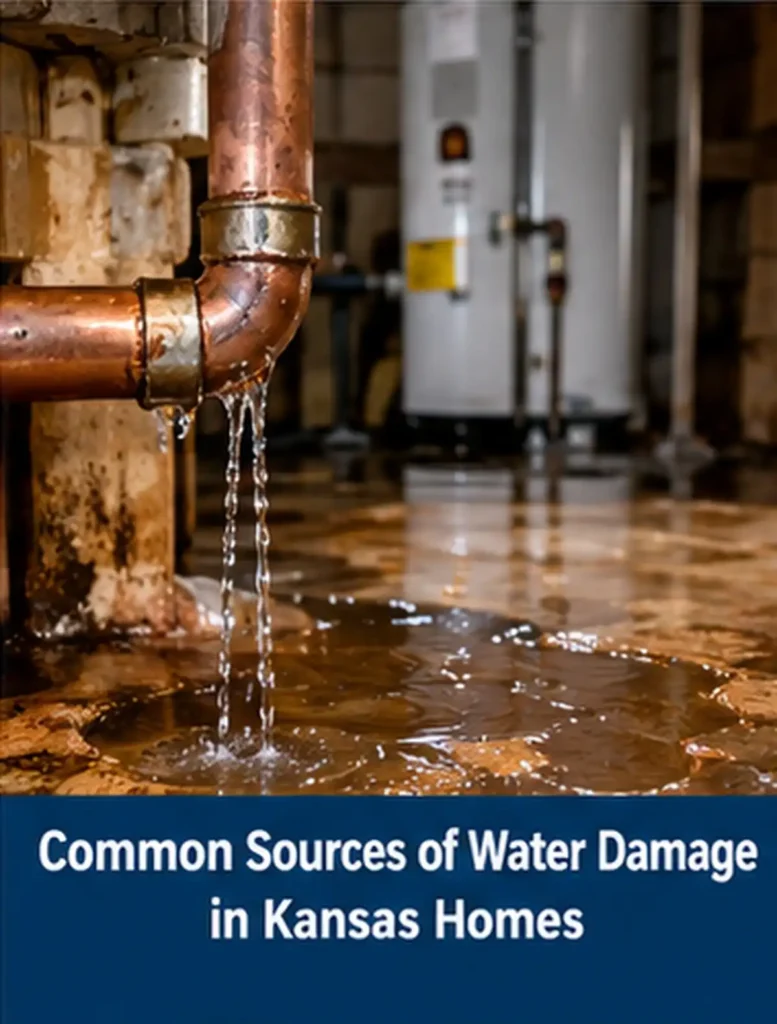
The table below shows what we see most often.
| Source | Peak Season | Warning Signs | Prevention Tip |
|---|---|---|---|
| Sump pump failure | Spring and summer storms | Pump cycling nonstop, water in pit near rim | Add a battery backup and test it yearly |
| Frozen / burst pipes | December to February | Low water pressure, frost on pipes | Insulate pipes in exterior walls and crawl spaces |
| Roof leaks | Spring hail and wind | Ceiling stains, damp attic insulation | Inspect shingles after every hailstorm |
| Water heater failure | Year-round | Rust, pooling water, age over 10 years | Install a drain pan and leak sensor |
| Washing machine hoses | Year-round | Bulging or cracked rubber hoses | Switch to braided steel hoses |
| Foundation seepage | After heavy rain | Damp basement walls, white mineral deposits | Extend downspouts 6+ feet from the house |
| Clogged gutters | Fall | Overflow during rain, stains on siding | Clean gutters after leaf drop |
| Sewer line backup | Heavy rain events | Gurgling drains, sewage odor | Install a backwater valve |
What Does Water Damage Cleanup Cost?
Every home is different, so honest pricing starts with an inspection. Still, you deserve a ballpark.
What water damage Norwich cleanup costs depends mostly on category, class, and square footage.
| Cost Factor | Lower Cost | Higher Cost |
|---|---|---|
| Water category | Category 1 clean water | Category 3 sewage or floodwater |
| Affected area | One room | Full basement or multiple floors |
| Materials | Vinyl, tile, concrete | Hardwood, plaster, finished basements |
| Response time | Called within hours | Waited days; mold already present |
| Rebuild scope | Minor drywall patching | Cabinets, flooring, full room rebuild |
For context, restoration jobs after the June 2026 Topeka storm averaged around $5,800. Small, fast-caught leaks cost far less. Large Category 3 floods with mold can cost much more.
Insurance Coverage at a Glance
| Type of Water Damage | Standard Homeowners Policy | What You May Need |
|---|---|---|
| Sudden burst pipe | Usually covered | Standard policy |
| Slow, long-term leak | Often denied | Regular maintenance records |
| Sump pump or drain backup | Usually excluded | Water backup endorsement |
| Outside floodwater | Excluded | Flood insurance (NFIP typically has a 30-day waiting period) |
| Sewer line backup | Usually excluded | Water backup endorsement |
If floodwater came in from outside, professional flood damage cleanup is essential. Floodwater is Category 3, and porous materials it touches typically need removal. Documenting that work properly also supports your flood insurance claim.
Sewage Backups: When the Water Is a Health Hazard
Sewage is the most dangerous water we handle. It carries bacteria, viruses, and parasites that can make your family sick. It is never a DIY job.
During heavy storms, overloaded municipal sewer lines can push waste back into basement floor drains. Older homes without a backwater valve are especially vulnerable. Our technicians wear full PPE, contain the area, and remove contaminated materials under Category 3 protocols.
Sewage Safety Checklist
- Keep children, pets, and anyone with a weak immune system away from the area.
- Don’t run water or flush toilets until the backup is resolved.
- Turn off HVAC systems that could spread contaminated air.
- Throw away food, toys, and porous items that touched sewage.
- Wash hands and clothing thoroughly after any contact.
Professional sewage backup cleanup includes extraction, removal of affected materials, disinfection, and deodorization. We also verify the area is dry before any rebuild begins.
Mold Prevention Checklist After Water Damage
Mold is the most costly side effect of slow drying. The EPA explains that the key to mold control is moisture control, and its guidance on mold cleanup in your home recommends drying wet materials within 24 to 48 hours.
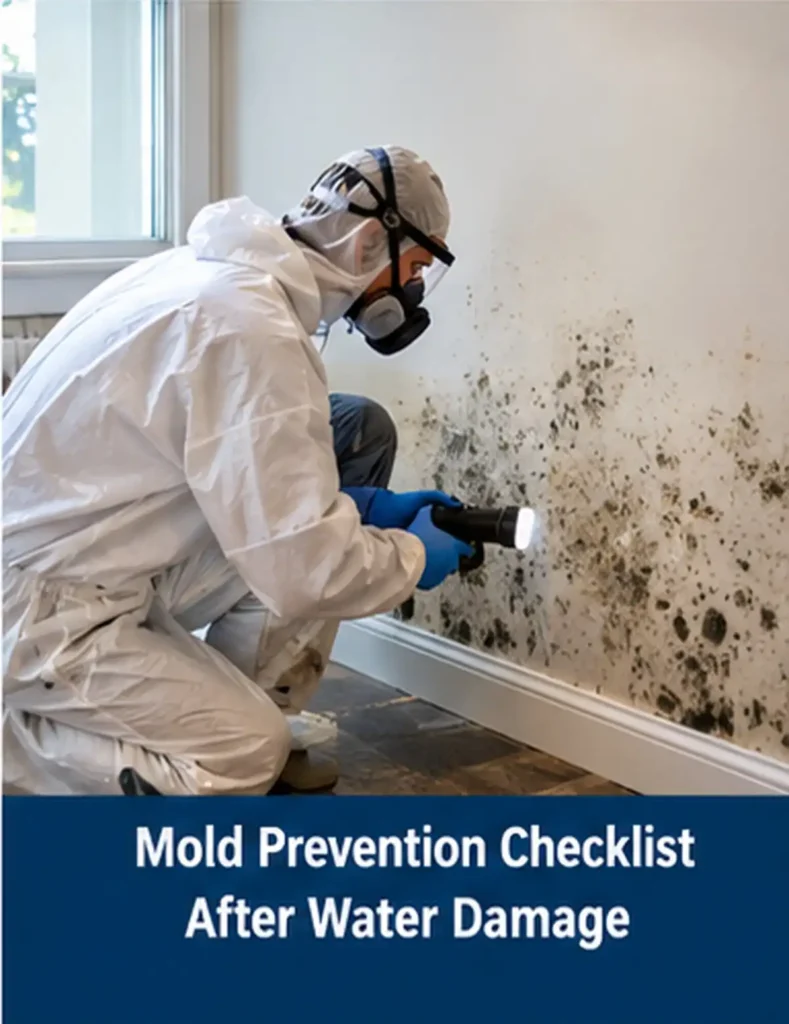
Here’s how to stay ahead of it.
Your Mold Prevention Checklist
- Remove standing water as fast as possible.
- Pull up wet carpet pad within 24 hours.
- Run dehumidifiers to keep indoor humidity below 50%.
- Open wall cavities if drywall has wicked water.
- Remove wet insulation from exterior walls.
- Apply antimicrobial treatment to cleaned surfaces.
- Verify dryness with a moisture meter, not by touch.
- Watch for musty odors for several weeks afterward.
- Check hidden spots: behind baseboards, under cabinets, inside closets.
Signs Mold Has Already Started
| Sign | What It Means | Next Step |
|---|---|---|
| Musty, earthy smell | Hidden growth likely | Professional inspection |
| Black, green, or white spots | Visible colonies | Don’t disturb; contain the area |
| Peeling paint or bubbling drywall | Moisture trapped behind surface | Moisture mapping |
| Worsening allergies indoors | Airborne spores possible | Air quality assessment |
| Growth larger than 10 sq. ft. | Beyond safe DIY scope | Professional mold remediation |
When growth covers a large area or sits inside walls, mold remediation with proper containment and HEPA filtration is the safe path. Scrubbing mold without containment can spread spores to clean rooms.
Get Ahead of Winter: Frozen Pipe Prevention for Kansas Homes
Fall is the best time to prepare. Kansas winters regularly bring single-digit nights, and pipes in exterior walls, garages, and crawl spaces freeze first. A burst half-inch pipe can release hundreds of gallons before anyone notices.
| Task | Why It Matters | When to Do It |
|---|---|---|
| Disconnect garden hoses | Trapped water freezes and splits spigots | Before first hard freeze |
| Insulate exposed pipes | Slows heat loss in cold zones | October |
| Seal foundation gaps | Blocks cold drafts on pipes | October |
| Know your main shutoff | Stops a burst fast | Now |
| Drip faucets on extreme nights | Moving water resists freezing | Below 20°F |
| Keep thermostat at 55°F+ | Protects pipes when you travel | All winter |
| Open cabinet doors | Lets warm air reach sink pipes | Cold snaps |
Working With Our Team in Norwich, KS (ZIP 67118)
We serve homeowners and businesses throughout Norwich, ZIP 67118. For water damage Norwich emergencies, active leaks and flooding get same-day or next-day priority. Non-emergency inspections come with same-week scheduling.
Here is what every customer gets:
| What You Get | What It Means for You |
|---|---|
| Free estimates | No-pressure pricing before any work begins |
| Clear written pricing | No surprise charges on your final bill |
| IICRC-based methods | Drying and cleanup done to industry standards |
| Daily moisture logs | Proof of drying for your insurance adjuster |
| Written follow-up | A full summary of the work after every visit |
| Respectful crews | Careful work in occupied homes |
We explain why before we cut, remove, or replace anything. If a gentler method will solve the problem, we use it.
FAQs
How fast should I call after finding water?
Call right away. Mold can start in 24 to 48 hours, and clean water can become contaminated in about 48 hours.
Can I dry my basement myself?
Small Category 1 spills on hard surfaces, maybe. Soaked carpet, drywall, or anything involving sewage or floodwater needs professional extraction and structural drying.
Will my insurance cover it?
Sudden, accidental leaks are often covered. Floodwater and sump pump backups usually need separate coverage. Call your agent to confirm.
Do you have to tear out my drywall?
Not always. In Category 1 losses caught early, we can often dry walls in place. Category 3 water usually means removal of affected drywall.
How long will the drying equipment run?
Most jobs take 3 to 5 days. Hardwood, plaster, and concrete can take longer.
Is it safe to stay in my home during drying?
Usually yes for Category 1 and 2 losses. With sewage or large mold problems, we may recommend limiting access to affected areas.
The Bottom Line
Water damage is a race against time. Every hour you wait makes the job bigger. Fast extraction, correct IICRC classification, and verified drying are what separate a simple repair from a full rebuild.
Whether you’re dealing with a burst pipe, a failed sump pump, or a storm-flooded basement, our team at Topeka Water Damage Restoration is ready to help. Call us for a free estimate, get honest answers, and receive a written follow-up once your home is dry and safe again.