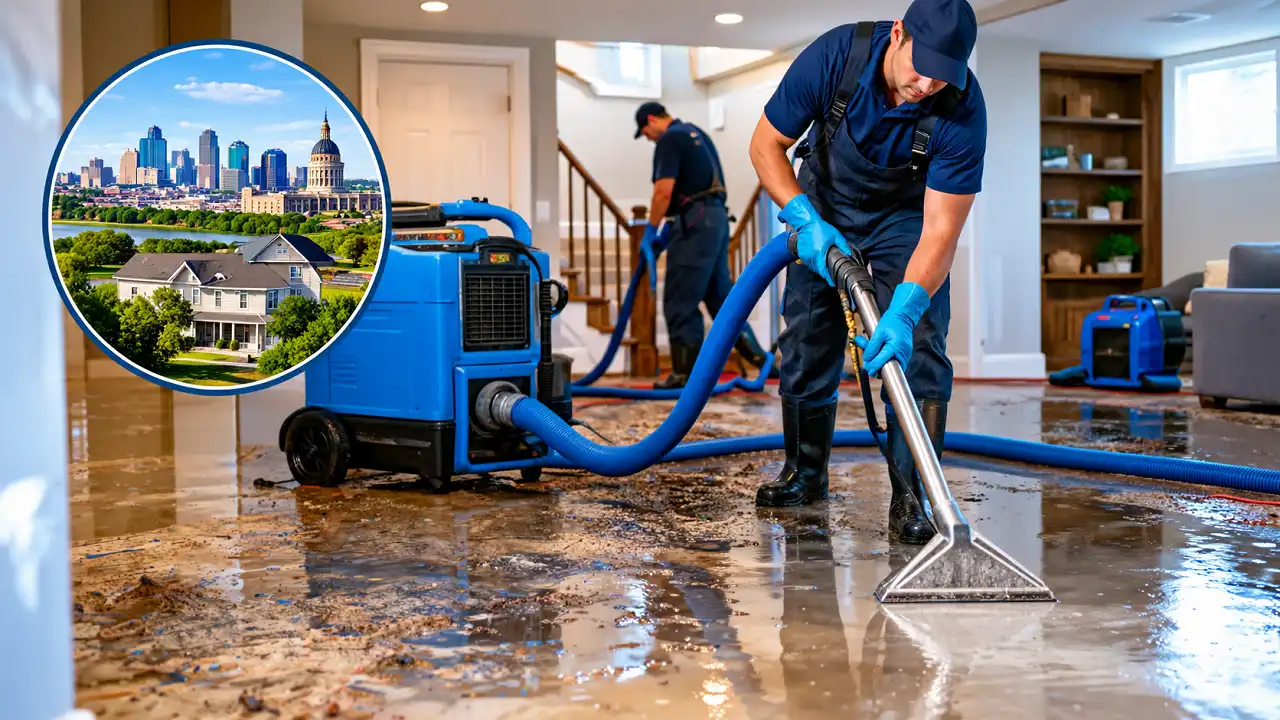
How Sewage Cleanup Kansas City Standards Protect Your Topeka Home
Raw sewage on your basement floor is a biohazard, not a mess you mop up. Within hours, black water soaks into drywall, subfloors, and framing, carrying bacteria, viruses, and parasites into the bones of your home. If you’re searching for sewage cleanup Kansas City help from Topeka, you need to know one thing first: the clock started the moment your drain backed up.
So what does that mean for you? Every hour of delay raises your repair bill, your mold risk, and your family’s health exposure. At Topeka Water Damage Restoration, we answer calls 24/7 because sewage never waits for business hours. This post walks you through exactly what we see in the field, what it costs, and how to protect your insurance claim.
Key Takeaways
- Sewage is Category 3 water. Porous materials like carpet, pad, and drywall it touches almost always need removal, not cleaning.
- Mold can start in 24 to 48 hours. Fast extraction and structural drying are your best defense against a second, bigger problem.
- Most standard homeowners policies exclude sewer backup. Check for a water backup endorsement today, before you need it.
Sewage Backups Hit Topeka Homes So Hard
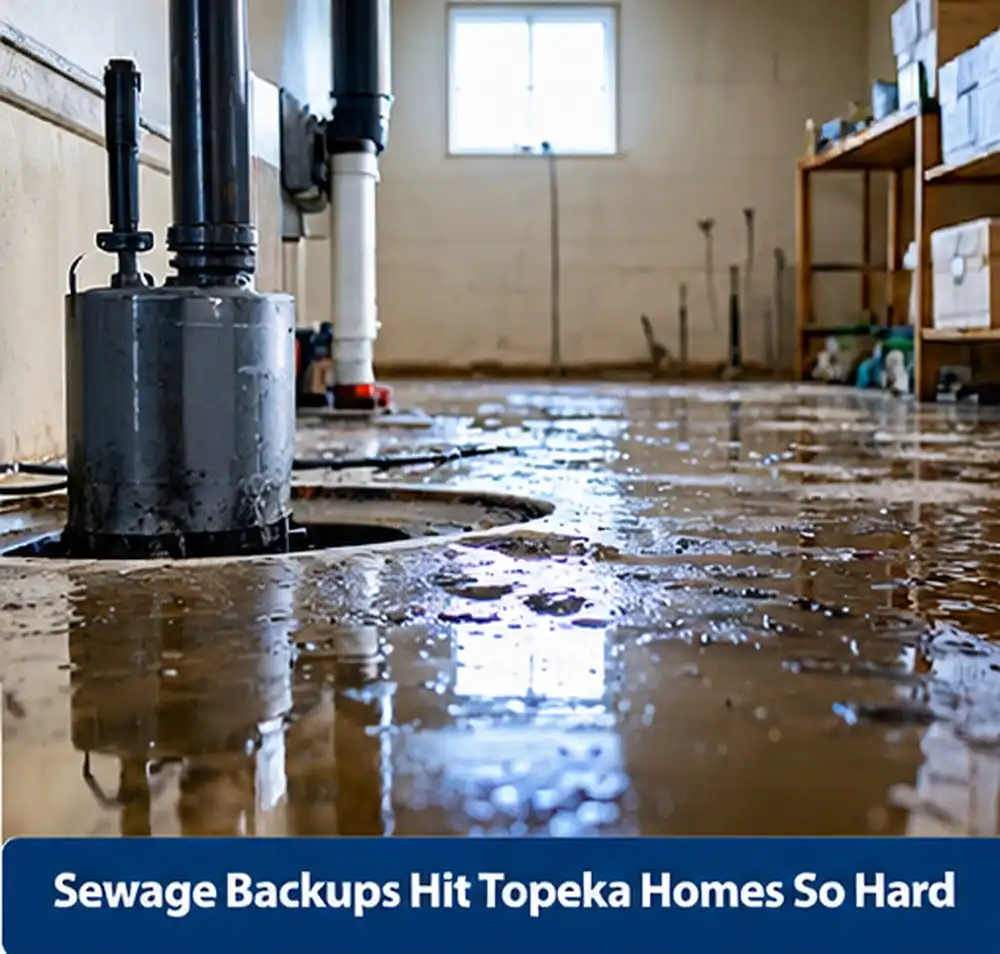
Topeka’s housing stock tells the story. Many homes in Potwin, Westboro, and College Hill were built decades ago with clay tile sewer laterals. Those old joints crack, shift, and invite tree roots from mature elms and oaks.
Our restoration crews frequently encounter this in historic Westboro basements: a root mass chokes the line, and the lowest drain in the house becomes the overflow point. Add a spring flash flood near Shunga Creek or a high Kansas River, and municipal lines can surcharge. That pressure pushes wastewater backward into floor drains, showers, and toilets.
Many homeowners call around for sewage cleanup Kansas City crews first. That can cost you an hour or more in drive time alone. A local team in Topeka, Tecumseh, Auburn, or Berryton can usually be on site much sooner.
Common Causes We See Across Northeast Kansas
| Cause | Where We See It Most | Warning Signs |
|---|---|---|
| Tree root intrusion | Potwin, Westboro, College Hill | Slow drains, gurgling toilets |
| Aging clay or cast iron pipes | Pre-1960 homes, Highland Park | Recurring clogs, sewer odor |
| Storm surcharge | Low areas near Shunga Creek | Backup during heavy rain |
| Grease and wipe clogs | Rentals, commercial kitchens, NOTO | Backup at the lowest fixture |
| Frozen or burst lines | Crawlspaces in January and February | Sudden pressure loss, wet walls |
| Failed sump or ejector pump | Finished basements in Sherwood | Alarm sounds, standing water |
Water Damage Category Comparison: Category 1 Clean vs. Category 3 Black Water
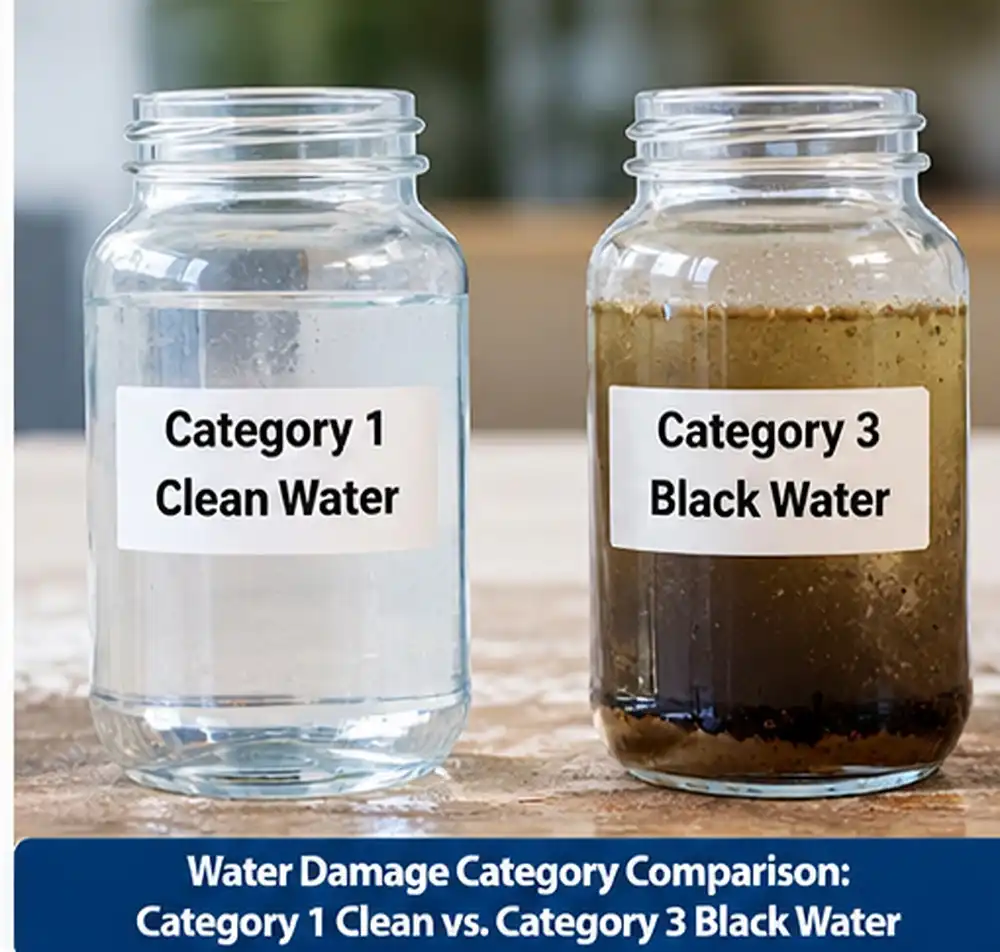
Not all water damage is equal. The IICRC S500 Standard sorts water into three contamination categories. Your category decides the cleanup method, the safety gear, and what can be saved.
According to the IICRC S500 water, sewage is always Category 3. This holds true even when the water looks clear. That’s why any legitimate sewage cleanup Kansas City or Topeka provider treats every backup with full biohazard protocols.
| Factor | Category 1 (Clean Water) | Category 2 (Gray Water) | Category 3 (Black Water) |
|---|---|---|---|
| Typical source | Supply line, faucet, rain | Washer, dishwasher, toilet (urine only) | Sewage, toilet waste, floodwater |
| Health risk | Low | Moderate | Severe |
| Pathogens present | Minimal | Some bacteria | E. coli, Hepatitis A, Salmonella, parasites |
| PPE needed | Gloves | Gloves, eye protection | Respirator, suit, boots, gloves |
| Carpet and pad | Often salvageable | Pad replaced, carpet maybe | Both replaced |
| Drywall | Dry in place if caught early | Often cut | Flood cut required |
| Antimicrobial | Optional | Recommended | Mandatory |
| Degrades over time? | Becomes Cat 2 in 24 to 48 hrs | Becomes Cat 3 in 48 hrs | Already worst case |
Key point: Clean water from a burst pipe can turn into Category 3 if it sits. Stagnant water grows bacteria fast, especially in a warm basement.
Steps to Stop Sewage From Spreading in the First Hour
Your first moves matter more than anything we do later. Here’s the emergency checklist our technicians give every caller.
- Get people and pets out. Children, seniors, and anyone with a weak immune system should leave the area first.
- Stop using water. No flushing, no laundry, no showers. Every gallon you send down adds to the backup.
- Shut off power to the affected area at the breaker, only if you can reach the panel without stepping in water.
- Turn off the HVAC system. Running the furnace or AC spreads contaminated air and odors through your ductwork.
- Close interior doors to keep cross-contamination confined.
- Document everything. Take photos and video of water levels, damaged items, and the source.
- Call a professional for sewage cleanup Kansas City area standards, and your plumber for the sewer line.
What to Do vs. What to Avoid
| Do This | Avoid This |
|---|---|
| Wear rubber boots and gloves if you must enter | Wading in barefoot or in sneakers |
| Open windows for ventilation | Using a household fan (it spreads spores and aerosols) |
| Move dry valuables upstairs | Using a shop vac on sewage (it aerosolizes bacteria) |
| Call your insurance agent early | Throwing items out before photos |
| Wash hands with soap and hot water | Using bleach mixed with ammonia cleaners (toxic gas) |
Our Professional Sewage Remediation Process
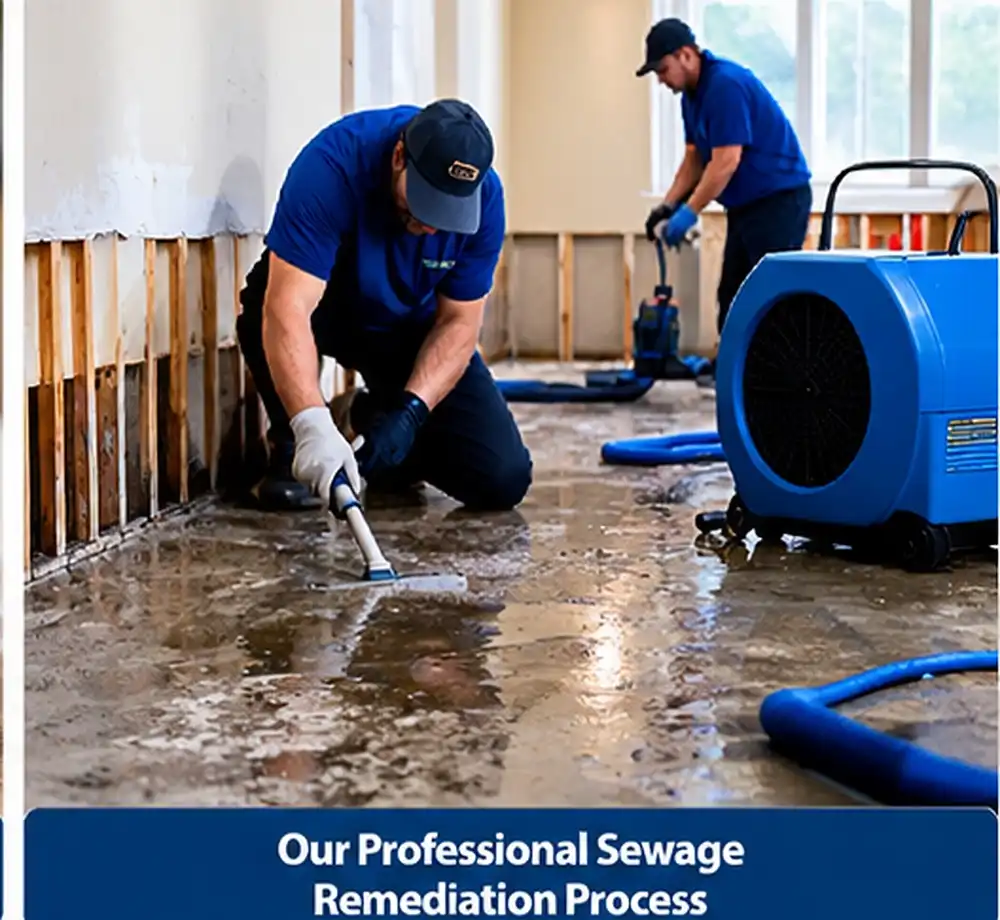
On recent emergency service calls in College Hill, we found homeowners had already spent hours with buckets and towels. The effort is understandable, but the result is wider contamination. Here’s how our certified technicians handle it instead.
Step-by-Step Sewage Extraction Protocol
- Safety assessment: We check for electrical hazards, gas leaks, and structural weakness.
- Containment: We seal the area with 6-mil poly sheeting and set up negative air pressure.
- Extraction: Truck-mounted pumps and extractors remove standing sewage and solids.
- Demolition: We remove carpet, pad, insulation, and make flood cuts in drywall.
- Cleaning: All hard surfaces get scrubbed with EPA-registered disinfectants.
- Antimicrobial treatment: We apply it to framing, concrete, and remaining materials.
- Structural drying: LGR dehumidifiers and air movers bring materials back to dry standard.
- Verification: Moisture meters and thermal imaging confirm the job is done.
Pro/Con Extraction Methods
| Method | Pros | Cons | Best For |
|---|---|---|---|
| Truck-mounted extraction | Most powerful, waste goes into sealed tanks | Hose length limits | Large basements, commercial jobs |
| Portable extractors | Fits tight spaces and upper floors | Slower, smaller capacity | Bathrooms, crawlspaces |
| Submersible pumps | Moves deep water fast | Can’t handle heavy solids | Water deeper than 2 inches |
| Household shop vac | Cheap and available | Aerosolizes pathogens, contaminates the unit | Never recommended for sewage |
That last row matters. A shop vac exhaust blows bacteria-laden mist right into your breathing zone.
Structural Drying Timelines & Equipment Metrics
Cleaning is only half the job. If moisture stays trapped in wall cavities, sill plates, or subfloors, you’ll face mold and wood rot months later. We use readings, not guesses, to decide when a space is truly dry.
Topeka’s climate makes this tricky. Summer humidity slows evaporation, and winter heating dries air too fast for some materials. Experienced sewage cleanup Kansas City region crews adjust their equipment for both seasons.
Typical Drying Timeline After a Sewage Backup
| Phase | Timeline | Equipment Used | Target Metric |
|---|---|---|---|
| Emergency extraction | Hours 0 to 6 | Truck-mount, submersible pumps | No standing water |
| Demolition and removal | Day 1 to 2 | Hand tools, contractor bags | Porous materials removed 12 to 24 in. above wick line |
| Disinfection | Day 1 to 2 | Sprayers, foggers | Full surface coverage |
| Drying setup | Day 2 | Air movers, LGR dehumidifiers, air scrubbers | Room RH dropping daily |
| Daily monitoring | Day 2 to 5 | Pin and pinless moisture meters | Readings logged every 24 hrs |
| Dry standard reached | Day 3 to 5 (typical) | Thermal camera, meters | Wood under 15% MC, RH 30 to 50% |
| Final verification | Day 4 to 7 | Meters, odor check | Matches unaffected reference areas |
Equipment Placement Guidelines
| Equipment | Purpose | Typical Placement Ratio |
|---|---|---|
| Air movers | Speed surface evaporation | 1 per 10 to 16 linear feet of wet wall |
| LGR dehumidifiers | Pull moisture from air | Based on cubic footage and water class |
| HEPA air scrubbers | Capture airborne contaminants | 1 per 500 to 1,000 sq ft in containment |
| Wall cavity dryers | Push air behind finished walls | Where walls are saved |
| Moisture meters | Track progress | Daily readings at marked points |
If you’ve lived through a humid Topeka summer, this moisture containment protocol makes complete sense. Air that’s already heavy with moisture can’t absorb more. Our dehumidifiers pull that air down so wet materials can release water.
Mold Prevention Protocols After Sewage Damage
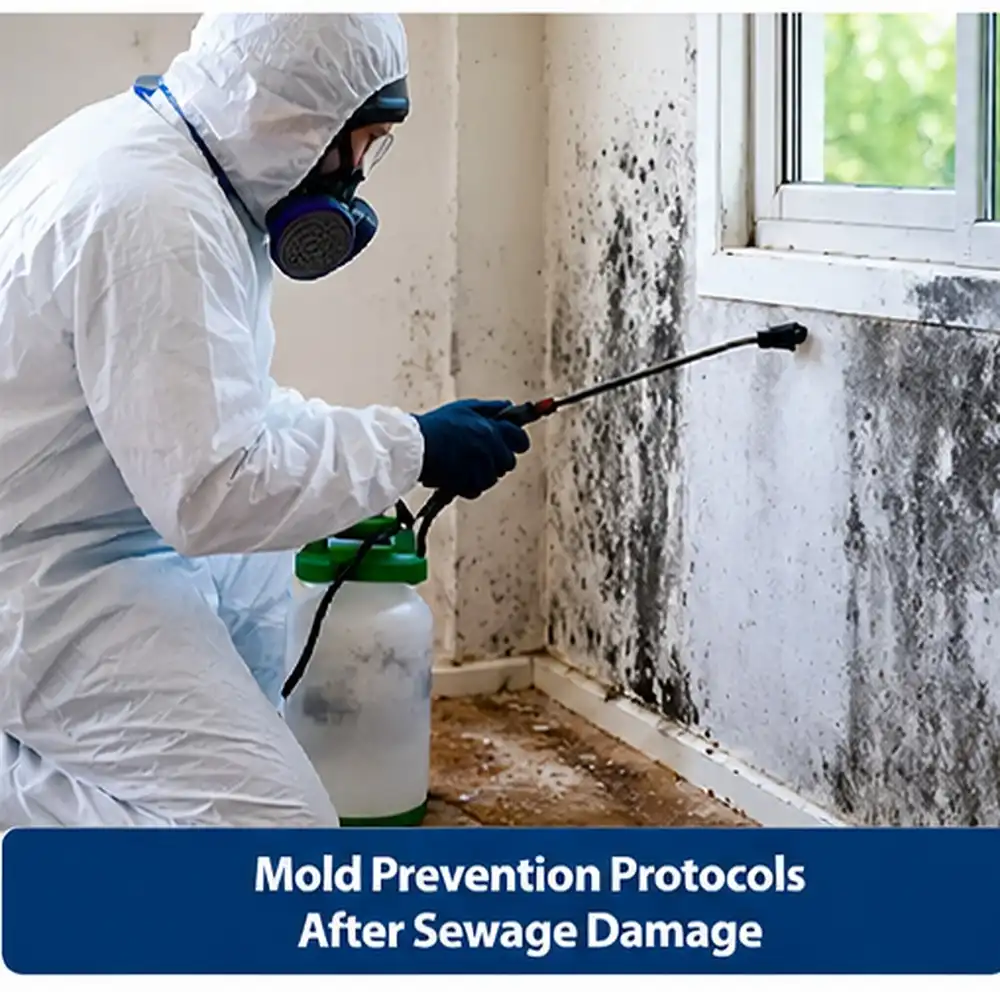
Sewage brings organic material and moisture together. That’s the perfect recipe for mold growth. The EPA’s guide to mold and moisture states that drying wet materials within 24 to 48 hours is key to preventing mold.
We see this play out after spring storms near the Kansas River. Homes dried within two days usually stay clean. Homes left for a week often need full mold remediation. Any trusted sewage cleanup Kansas City or Topeka provider builds mold prevention into the job from day one.
Mold Mitigation Checklist
- Seal the work zone with poly sheeting and zipper doors.
- Run negative air so spores can’t escape into clean rooms.
- Wear full PPE, including an N95 or half-face respirator.
- Remove porous materials that touched sewage.
- HEPA vacuum all exposed surfaces.
- Apply antimicrobial to framing and concrete.
- Dry to dry standard before any rebuild starts.
- Recheck in 2 to 4 weeks for musty odors or new staining.
Signs Mold Is Already Growing
| Sign | What It Means | Action |
|---|---|---|
| Musty smell | Active growth, possibly hidden | Inspect wall cavities |
| Black or green spots | Visible colonies | Professional remediation |
| Warped baseboards | Trapped moisture | Moisture readings needed |
| Allergy flare-ups indoors | Airborne spores | Air quality assessment |
| Peeling paint | Moisture behind surface | Thermal imaging scan |
Materials Mitigation: Salvage vs. Replace Guidelines
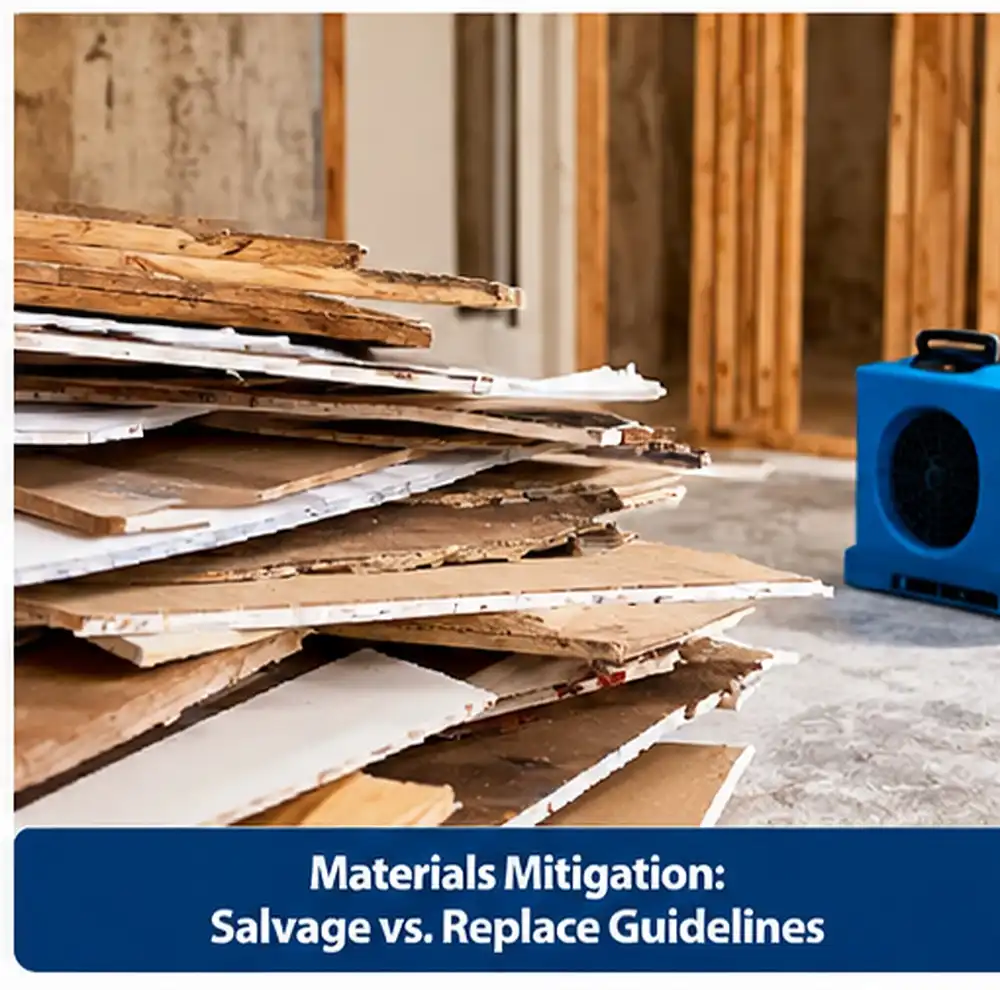
This is where homeowners struggle most. You want to save what you can. But with Category 3 water, porous items that absorbed sewage can’t be reliably disinfected.
We follow IICRC guidance and make the call item by item. Reputable sewage cleanup Kansas City area contractors use the same rules. If a company offers to “clean and keep” your sewage-soaked carpet, get a second opinion.
| Material | Verdict | Why |
|---|---|---|
| Carpet and pad | Replace | Absorbs pathogens deep in fibers |
| Drywall | Replace (flood cut) | Paper facing feeds mold |
| Fiberglass insulation | Replace | Holds contaminated water |
| Concrete floors | Salvage | Non-porous enough to clean and disinfect |
| Solid wood studs | Salvage | Clean, treat, and dry to standard |
| Hardwood flooring | Case by case | Often replaced if saturated or cupped |
| Ceramic and porcelain tile | Salvage | Clean grout thoroughly |
| Luxury vinyl plank | Case by case | Water trapped underneath is the risk |
| Upholstered furniture | Replace | Can’t disinfect the cushion core |
| Solid wood furniture | Often salvage | Clean, disinfect, and dry slowly |
| Mattresses and box springs | Replace | Not cleanable |
| Clothing and textiles | Case by case | Professional laundering may work |
| Paper documents and photos | Specialist or replace | Freeze-drying services may help |
| Plush toys | Replace | Too porous to sanitize |
| Hard plastic toys | Salvage | Wash and disinfect |
| Food, medicine, cosmetics | Discard | Health hazard |
Tip: Photograph every item before it goes to the curb. Your adjuster needs proof of quantity, condition, and brand.
Estimated Sewage Repair Costs in Topeka, KS
We believe in transparent pricing. These are typical 2026 estimates for the Topeka area. Your final cost depends on square footage, contamination depth, and materials involved.
Rates for sewage cleanup Kansas City metro jobs often run a bit higher due to travel and labor costs. Here’s what we usually see locally.
| Service | Estimated Cost Range |
|---|---|
| Small backup cleanup (bathroom, under 100 sq ft) | $1,000 to $3,000 |
| Category 3 cleanup (per sq ft) | $7 to $13 |
| Basement sewage remediation (500 to 1,000 sq ft) | $4,000 to $12,000 |
| Drywall flood cut and replacement (per sq ft) | $3 to $7 |
| Carpet and pad replacement (per sq ft, installed) | $3 to $8 |
| Structural drying equipment (per day) | $150 to $500 |
| Secondary mold remediation | $1,500 to $6,000+ |
| Sewer camera inspection (plumber) | $150 to $400 |
| Backwater valve installation (plumber) | $800 to $2,500 |
What Drives Your Cost Up or Down
- Response time: Same-day service keeps damage smaller.
- Finished vs. unfinished basement: Drywall, trim, and flooring add removal and rebuild costs.
- Depth of water: Higher water means taller flood cuts.
- Access: Crawlspaces take more labor than open basements.
- HVAC contamination: Duct cleaning or replacement adds cost.
- Hidden moisture: Wet subfloors or wall cavities extend drying time.
These figures are estimates, not quotes. We always provide a written scope before work begins.
Insurance Claim Steps for Sewage Backup

Here’s the hard truth. Standard homeowners policies usually exclude sewer backup. Coverage typically requires a separate water backup endorsement.
Flood is another story. Through the FEMA National Flood Insurance Program, flood policies may cover sewage damage when it results directly from a flood. Ask your agent which applies to you. Homeowners comparing sewage cleanup Kansas City options should confirm coverage before signing anything.
Coverage Quick Reference
| Policy Type | Covers Sewer Backup? | Notes |
|---|---|---|
| Standard homeowners (HO-3) | Usually no | Excluded unless endorsement added |
| Water backup endorsement | Yes, up to limit | Limits often $5,000 to $25,000 |
| NFIP flood insurance | Only if caused by flood | Separate policy, 30-day wait typical |
| Renters insurance | Personal items with endorsement | Building damage is the landlord’s |
| Commercial property | Varies by policy | Review backup and business interruption terms |
Step-by-Step Claim Process
- Call your insurer within 24 hours. Late notice can hurt your claim.
- Photograph and video everything before cleanup starts.
- Prevent further damage. Policies require “reasonable mitigation,” so call professionals fast.
- Keep damaged samples like a carpet square until the adjuster visits.
- Save every receipt, including hotel stays and equipment rentals.
- Request our moisture logs. Daily readings prove drying was done right.
- Get the plumber’s report showing the backup’s cause.
- Review the adjuster’s estimate line by line against our scope.
We work directly with adjusters every week. Our documentation includes photos, moisture maps, and itemized invoices that match insurance software formats.
Next Steps: Get Fast, Local Help From Our Topeka Crews
Sewage damage is a Category 3 emergency. Fast extraction, proper material removal, and verified structural drying protect your health and your wallet. Waiting turns a cleanup into a mold remediation and rebuild project.
Before you call a distant sewage cleanup Kansas City provider, remember that our crews are already in your neighborhood. We serve Westboro, College Hill, Potwin, NOTO Arts District, Highland Park, Sherwood, plus Tecumseh, Auburn, and Berryton.
Our Core Restoration Services
- 24/7 emergency water extraction
- Sewage remediation and biohazard cleanup
- Basement flood cleanup
- Structural drying with daily moisture monitoring
- Mold removal and prevention
- Burst pipe restoration
Start with three actions today: check your policy for a backup endorsement, locate your main water shutoff, and save our number. When sewage hits, you’ll be glad you planned ahead. Call Topeka Water Damage Restoration any hour, and we’ll get a crew rolling to your door.

One Comment