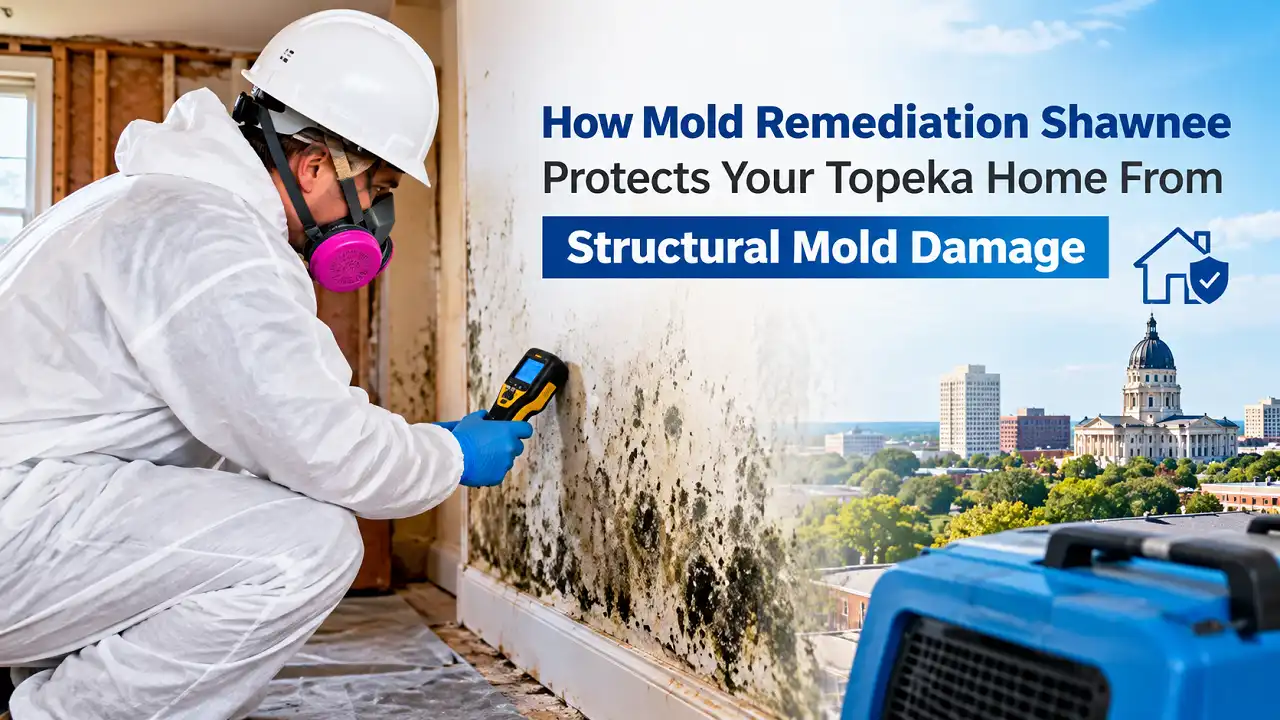
How Mold Remediation Shawnee Protects Your Topeka Home From Structural Mold Damage
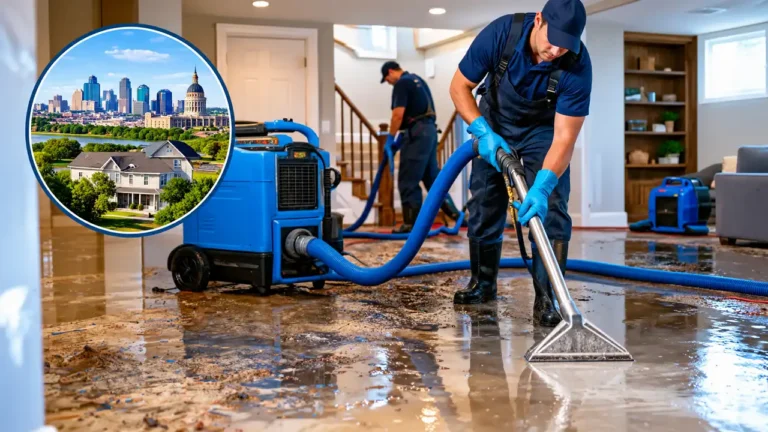
A burst pipe at 2 a.m. or a basement full of Shunga Creek floodwater starts a countdown. Within 24 to 48 hours, wet drywall, carpet pad, and wood framing can begin growing mold. That growth weakens structural materials, lowers indoor air quality, and can turn a $500 cleanup into a five-figure rebuild. The first two days decide which bill you get.
At Water Damage Restoration In Topeka, our crews handle mold remediation Shawnee calls around the clock. We see what happens when water sits, and we’ve built our process to stop it fast.
Key Takeaways
- Dry everything within 24 to 48 hours. This is the most effective way to prevent mold after any leak, flood, or pipe burst.
- Mold over 10 square feet needs professional help. So does any mold inside walls or HVAC, and any mold tied to sewage or floodwater. Pros bring containment, HEPA filtration, and moisture mapping.
- Fixing the moisture source is not optional. Mold comes back to any spot that stays damp, no matter how well it was cleaned.
Why Shawnee County Homes Face High Mold Risk
Topeka gives mold almost everything it wants. We have humid summers, heavy spring storms, hard winter freezes, and expansive clay soil.
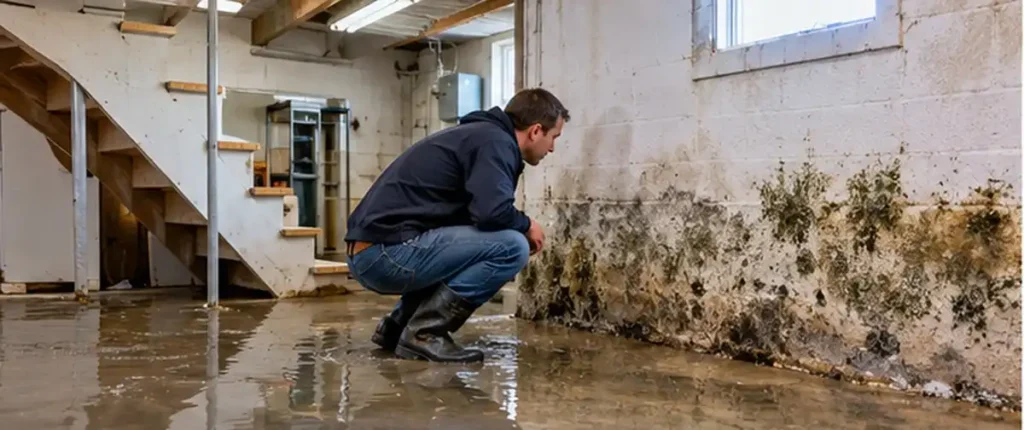
Put those together and you get damp basements year-round. That’s why mold remediation shawnee work keeps our crews busy in every season.
The Four Local Mold Drivers
| Local Factor | How It Creates Mold Risk | Where We See It Most |
|---|---|---|
| Clay soil | Swells in spring rain and pushes water through foundation cracks and cove joints | Older basements across Topeka |
| Humid summers | Raises indoor humidity above 60% in basements with no visible leak | Finished basements, crawl spaces |
| Kansas River and Shunga Creek flooding | Brings Category 3 water into lower levels | Low-lying areas near waterways |
| Freeze-thaw cycles | Widens cracks and bursts pipes in exterior walls | Uninsulated plumbing, attics |
Historic Homes Carry Extra Risk
Our restoration crews frequently encounter this in historic Westboro basements. Stone and block foundations soak up moisture. Original drain tile often stopped working decades ago. On recent emergency service calls in College Hill, we found hidden mold behind finished paneling. The homeowners didn’t know it was there.
Potwin’s older craftsman homes share the same problems. We see galvanized plumbing, limited waterproofing, and poor ventilation. Newer homes in Sherwood and Highland Park are not immune either. A failed sump pump or a cracked supply line can soak a finished basement overnight.
If you’ve lived through a humid Topeka summer, you already know that basement smell. That musty odor is often the first sign of active growth.
How Fast Does Mold Grow? The Real Timeline
Mold does not wait for a convenient time. Spores are already in every home, and they activate the moment materials stay wet. This timeline is why we treat every mold remediation shawnee call as urgent.
| Time After Water Exposure | What Happens | What You Should Do |
|---|---|---|
| 0 to 24 hours | Materials absorb water. No visible mold yet. | Stop the source, extract water, start drying |
| 24 to 48 hours | Spores activate and begin colonizing | Professional drying and dehumidification |
| 48 to 72 hours | Visible spots appear. Musty odor starts. | Containment and remediation needed |
| 1 to 2 weeks | Colonies spread into wall cavities and framing | Full removal of affected materials |
| 2+ weeks | Structural decay, poor air quality | Extensive removal and rebuild |
The CDC’s mold guidance says the same thing. Homes should be cleaned and dried fully within 24 to 48 hours after a flood. The CDC also notes that mold can cause a stuffy nose, coughing, wheezing, and skin irritation. People with asthma or weak immune systems face bigger risks. Speed protects both your structure and your family.
Water Damage Category Comparison: Clean vs. Black Water
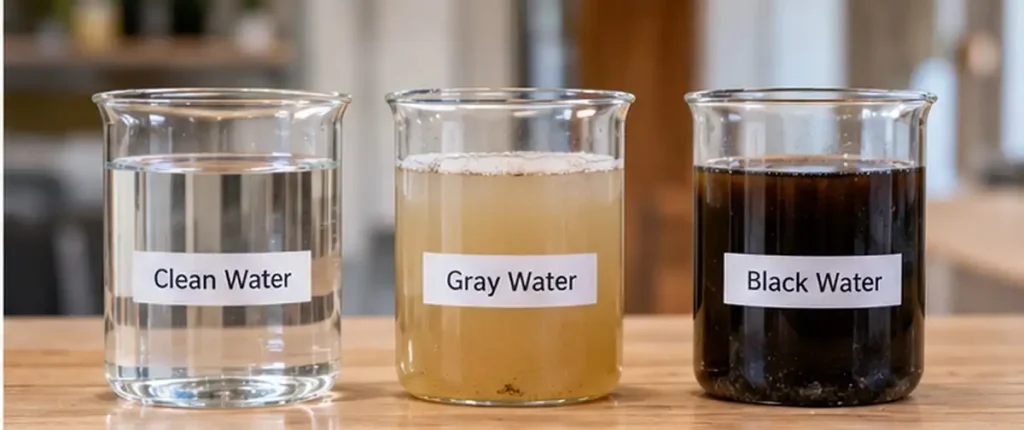
The type of water behind your mold changes everything. It decides cleanup method, safety gear, and what must be thrown out. Our certified technicians follow the IICRC standards, the industry benchmark for water and mold restoration.
| Category | Water Type | Common Topeka Sources | Health Risk | Typical Response |
|---|---|---|---|---|
| Category 1 | Clean water | Burst supply line, ice maker leak, rainwater | Low | Extract and dry, most materials saved |
| Category 2 | Gray water | Washing machine, dishwasher, sump pump failure | Moderate | Extract, antimicrobial treatment, remove pad |
| Category 3 | Black water | Sewage backup, Kansas River or Shunga Creek floodwater | High | Full PPE, remove porous materials, disinfect |
Here’s what most people miss. Clean water does not stay clean. Category 1 water can degrade to Category 2 within about 48 hours. Category 2 can slide into Category 3 soon after. A “small” leak left over a holiday weekend can become a contamination job. Category always matters more than gallons. That’s a big reason mold remediation shawnee costs vary so much from one home to the next.
Immediate Steps When You Spot Mold
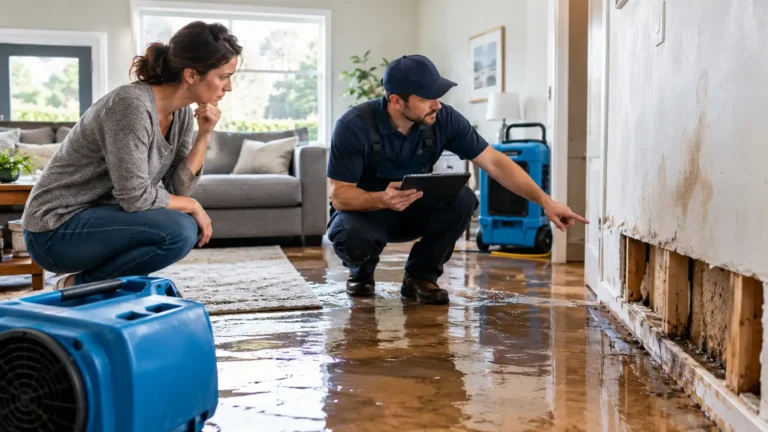
You found mold. Don’t panic, and don’t grab a scrub brush yet. These steps limit spread and protect your insurance claim before our team arrives.
- Stop the water source. Shut the main valve or the fixture valve if you can reach it safely.
- Avoid electrical hazards. Never walk through standing water near outlets or appliances.
- Turn off the HVAC system. Ducts carry spores into clean rooms.
- Close the door to the affected area. Keep kids and pets out.
- Don’t scrub, sand, or spray heavy growth. Disturbing mold releases millions of spores.
- Take photos and video of everything before cleanup starts.
- Note the clues. Musty smells, foundation cracks, and downspouts dumping near the house all help locate the source.
- Call a certified team for anything larger than a small patch.
One firm rule: never paint over mold. It hides the problem, the paint peels, and we end up removing both later.
Structural Drying Timelines & Equipment Metrics
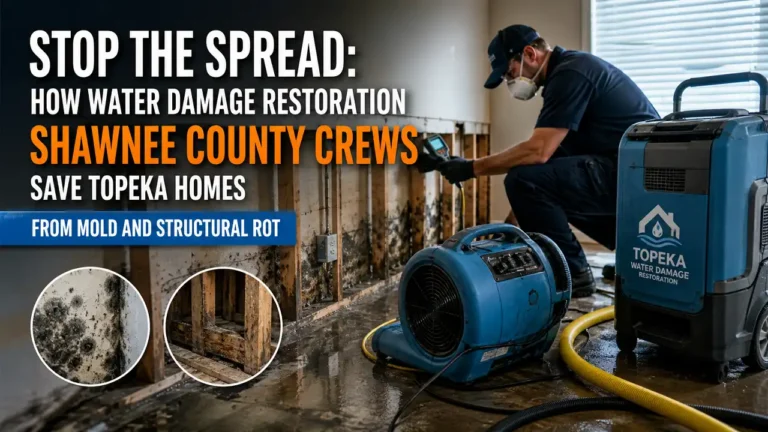
Drying is the step that prevents mold from coming back. It’s also the step people underestimate most. A surface can feel dry while the wall cavity, subfloor, or framing still holds enough water to feed new growth. On every mold remediation shawnee project, we measure moisture before we decide anything is finished.
Equipment We Deploy
| Equipment | Purpose | Typical Placement Guideline |
|---|---|---|
| Air movers | Push air across wet surfaces to speed evaporation | About 1 per 10 to 16 linear feet of wet wall |
| LGR dehumidifiers | Pull moisture out of the air so materials keep drying | Sized by room volume and water class |
| HEPA air scrubbers | Capture airborne spores during remediation | Run inside containment under negative pressure |
| Moisture meters | Read moisture content in wood and drywall | Daily readings at mapped points |
| Thermal imaging cameras | Find hidden wet areas behind walls and ceilings | Initial inspection and final check |
| Hygrometers | Track temperature and relative humidity | Inside and outside the drying zone |
Drying Targets and Timelines
| Material or Condition | Dry Target | Typical Drying Time |
|---|---|---|
| Wood framing | Roughly 15% moisture content or lower, matched to unaffected wood | 3 to 5 days |
| Drywall (salvageable) | Matches readings from dry reference walls | 2 to 4 days |
| Concrete basement slab | Matches dry reference readings | 4 to 7+ days |
| Hardwood flooring | Within a few points of unaffected boards | 5 to 14 days |
| Indoor relative humidity | 30% to 50% | Held during and after drying |
These numbers shift with season. Topeka’s humid July air slows drying, while dry January air speeds it up. We document readings daily so you and your adjuster can see the progress.
DIY vs. Professional Remediation: An Honest Decision Guide
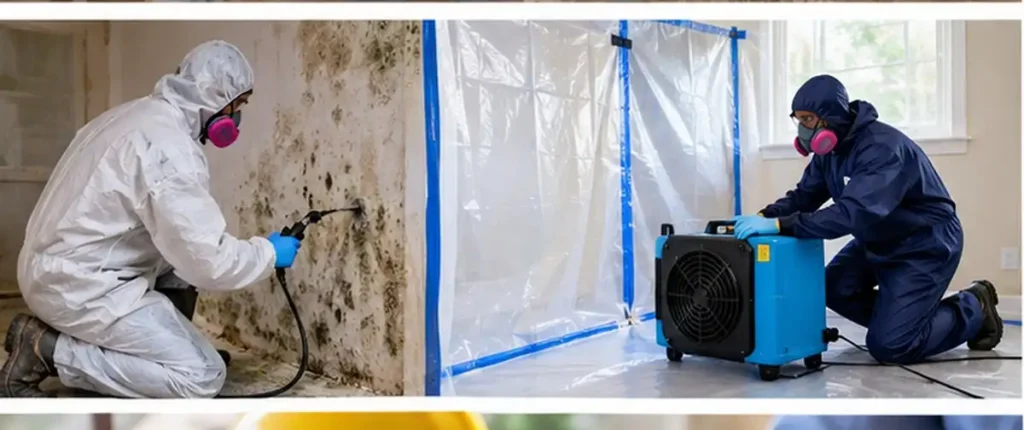
We believe in straight talk. Some mold is safe to clean yourself. Much of it isn’t. The EPA’s Brief Guide to Mold, Moisture, and Your Home supports the common 10-square-foot rule. Roughly a 3-by-3 patch is the limit for homeowner cleanup.
| Situation | DIY Okay? | Why |
|---|---|---|
| Under 10 sq ft on tile, glass, or sealed surfaces | Yes | Hard surfaces clean with detergent and water |
| Small spot from clean water, leak already fixed | Yes | Low contamination risk |
| Over 10 sq ft | No | Needs containment and HEPA filtration |
| Inside walls, ceilings, or HVAC ducts | No | Hidden growth spreads when disturbed |
| From sewage or floodwater | No | Category 3 needs PPE and disinfection |
| Anyone in home has asthma or lung issues | No | Exposure risk is too high |
| Musty smell but no visible source | No | Needs moisture mapping and thermal imaging |
If You Do Clean a Small Area Yourself
- Wear gloves, goggles, and an N95 respirator
- Scrub hard surfaces with detergent and water, then dry fully
- Bag and throw away moldy porous items like ceiling tiles
- Never mix bleach with ammonia. It creates toxic gas.
- Fix the moisture source first, or the mold returns
When in doubt, get it checked. A professional assessment costs far less than guessing wrong. Calling for mold remediation shawnee help early usually keeps the job small.
Materials Mitigation: Salvage vs. Replace Guidelines
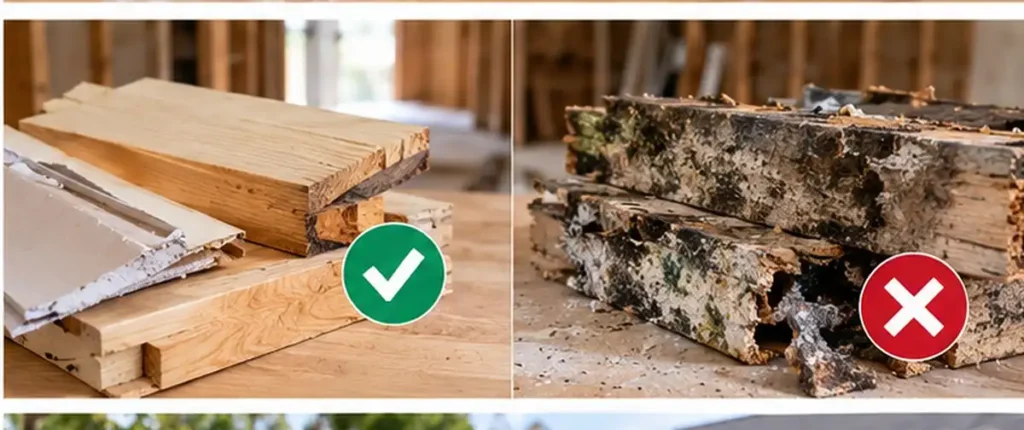
Every homeowner asks, “Can we save this?” The answer depends on material type, water category, and how long it stayed wet. Our rule is simple: porous materials that stay wet too long get replaced.
| Material | Category 1 (Dried Fast) | Category 3 or Moldy | Notes |
|---|---|---|---|
| Solid wood framing | Usually saved | Often saved after cleaning and treatment | Must dry to target moisture |
| Drywall | Often saved | Replace | Cut at least 12 inches above the wet line |
| Carpet | Sometimes saved | Replace | Pad is almost always replaced |
| Carpet pad | Usually replaced | Replace | Holds water like a sponge |
| Fiberglass insulation | Usually replaced | Replace | Traps moisture and spores |
| Tile and concrete | Saved | Saved after disinfection | Non-porous surfaces clean well |
| Hardwood flooring | Often saved | Case by case | Cupping may require replacement |
| Upholstered furniture | Sometimes | Usually replace | Depends on saturation |
| Ceiling tiles | Replace if stained | Replace | Cheap to replace, hard to clean |
On jobs in Tecumseh and Berryton, we often see finished basements with carpet over concrete. The carpet and pad usually go. The slab almost always stays.
Estimated Mold and Water Damage Repair Costs in Topeka, KS

Cost is the question everyone wants answered, so here are honest ranges. Final pricing depends on size, location, water category, and how fast you call. Every mold remediation shawnee estimate we write is itemized in writing before work begins.
| Job Scope | Typical Range | What It Covers |
|---|---|---|
| Small surface mold | $300 to $800 | One small area on a hard surface |
| Medium remediation | $1,000 to $3,500 | One room, some drywall and insulation removal |
| Large or hidden mold | $3,500 to $7,000+ | Multiple areas, wall cavities, framing treatment |
| Whole-basement flood mold | $6,000 to $15,000+ | Full removal, drying, and rebuild |
| Emergency water extraction | $500 to $2,500 | Pumping and initial water removal |
| Structural drying | $1,000 to $4,000 | Equipment, monitoring, 3 to 5 days |
| Sewage cleanup (Cat 3) | $2,000 to $10,000+ | PPE, disinfection, material removal |
| Post-remediation verification | $250 to $600 | Moisture checks and optional lab testing |
What Pushes Costs Up
- Delayed response. Mold spreads daily.
- Hidden growth behind walls or under floors
- Category 3 water from sewage or river flooding
- HVAC contamination requiring duct cleaning
- Limited access in crawl spaces or attics
Fast action is the cheapest option you have.
Our Step-by-Step Remediation Process
When our crews arrive, we follow the same proven order every time. No shortcuts. No vague invoices. This process is the backbone of every mold remediation shawnee job we take on, from the NOTO Arts District to Auburn.
- Inspection and moisture mapping. We use thermal cameras and moisture meters to find every wet spot, seen or hidden.
- Source correction. We stop the leak or flag the drainage problem feeding the mold.
- Containment. We seal the area with 6-mil plastic sheeting and set up negative air pressure.
- HEPA air filtration. Air scrubbers capture spores throughout the work.
- Removal of contaminated materials. Moldy drywall, insulation, and carpet pad are cut out, bagged, and hauled away.
- HEPA vacuuming and cleaning. We clean framing and salvageable surfaces.
- Antimicrobial treatment. EPA-registered products go on affected areas.
- Structural drying. Air movers and dehumidifiers run until materials hit dry targets.
- Final verification. We confirm dryness with documented readings. Clearance testing is available when needed.
- Rebuild support. We help coordinate drywall, flooring, and finish work.
A quick note on testing: the EPA confirms there are no federal standards for acceptable airborne mold levels. The CDC does not recommend routine mold testing when mold is visible. We focus on removing growth and fixing moisture, and we use testing only when it actually answers a question.
Mold Prevention Checklist for Topeka Homes
The best remediation is the job you never need. Use this checklist season by season.
Year-Round
- Keep indoor humidity below 50% with a dehumidifier or AC
- Fix leaks fast, even small drips under sinks
- Run bathroom and kitchen exhaust fans during and after use
- Vent your dryer outside, never into a basement or attic
- Check your basement monthly for damp spots or musty smells
Spring (Storm and Flood Season)
- Test your sump pump before heavy rains
- Clean gutters and extend downspouts 5 to 10 feet from the foundation
- Grade soil away from your home
- Watch for seepage at the cove joint after storms
Summer (Humidity Season)
- Run a basement dehumidifier continuously
- Keep AC drain lines clear
- Avoid storing cardboard boxes directly on concrete floors
Fall and Winter (Freeze Season)
- Insulate exposed pipes in crawl spaces and exterior walls
- Disconnect garden hoses before the first hard freeze
- Keep the heat at 55°F or higher when traveling
- Know where your main water shutoff is located
Our crews see the same pattern in older Topeka homes again and again. Humidity control gets overlooked for years, and then one wet spring tips the balance.
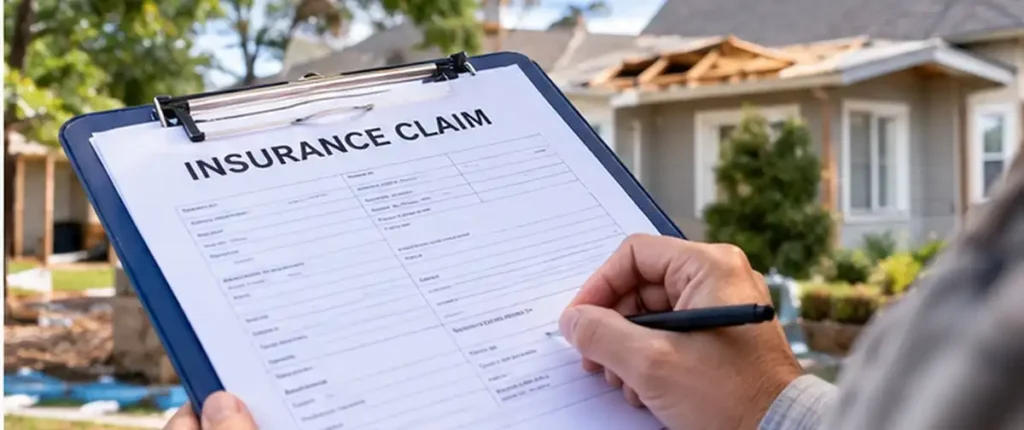
Insurance Claim Tips for Mold and Water Damage
Insurance can be the hardest part of recovery. Coverage usually depends on what caused the water and how quickly you acted. Here’s how to protect your claim from day one.
What Is Usually Covered vs. Not
| Cause | Typically Covered? | Notes |
|---|---|---|
| Sudden burst pipe | Often yes | Includes resulting mold in many policies |
| Appliance failure (water heater, washer) | Often yes | Sudden and accidental |
| Slow leak ignored for months | Usually no | Viewed as neglect or maintenance |
| River or surface flooding | No, on standard policies | Requires separate NFIP or private flood insurance |
| Sewer backup | Only with an endorsement | Check for a water backup rider |
| High humidity mold | Usually no | Treated as a maintenance issue |
Many policies also cap mold coverage with a sublimit. Read your declarations page before you need it.
Claim Steps That Protect You
- Document everything with photos and video before cleanup.
- Mitigate immediately. Most policies require you to prevent further damage.
- Call your insurer within 24 to 48 hours.
- Keep damaged items until the adjuster sees them, unless they pose a health risk.
- Save every receipt, including hotel stays and equipment costs.
- Request written estimates and keep copies of all moisture readings.
- Ask about flood coverage if you live near the Kansas River or Shunga Creek.
We provide daily moisture logs, photo documentation, and itemized estimates. This paperwork makes mold remediation shawnee claims far easier for adjusters to approve. Good records often decide good outcomes.
People Also Ask Things Like This?
How quickly can you respond to a mold or water emergency?
We offer 24/7 emergency response and aim to arrive within 60 minutes of your call across Topeka and nearby towns.
How long does mold remediation take?
Small jobs often finish in one day. Larger projects with structural drying usually take 3 to 7 days.
Can mold come back after remediation?
Only if moisture returns. That’s why we fix the source and verify dryness before we finish.
Is bleach good for killing mold?
Bleach can clean small hard-surface spots. It doesn’t reach growth inside porous materials like drywall or wood, so it isn’t a real fix for bigger jobs.
Do I need mold testing?
Usually not if mold is visible. Testing helps when you smell mold but can’t find it, or when you need clearance documentation.
Is black mold more dangerous than other mold?
Color doesn’t tell you much. All indoor mold growth should be removed, and the moisture source should be fixed.
Do you serve areas outside Topeka?
Yes. We serve Tecumseh, Auburn, Berryton, and communities across Shawnee County.
Our Water Damage and Mold Services in Topeka
At Topeka Water Damage Restoration, we handle every step from first extraction to final dry-out. Browse our full services portal or jump straight to what you need:
| Service | What We Do |
|---|---|
| Water Extraction | Fast removal of standing water with truck-mounted and portable units |
| Water Removal | Clearing water from floors, carpets, and cavities |
| Flood Cleanup | Storm and river flood recovery, including Category 3 water |
| Basement Water Removal | Pumping, drying, and protecting below-grade spaces |
| Sewage Cleanup | Safe black water removal and disinfection |
| Burst Pipe Water Damage | Emergency response to frozen and failed pipes |
| Structural Drying | Monitored drying of framing, subfloors, and walls |
| Mold Remediation | Containment, removal, treatment, and verification |
| Toilet Overflow Cleanup | Sanitary cleanup and drying of bathrooms and below |
| Sump Pump Failure Cleanup | Basement recovery after pump or power failure |
Call Us the Moment You See Water or Mold
Water and mold never keep business hours, and neither do we. Our crews are ready 24/7 with transparent pricing, jargon-free advice, and the equipment to dry your home right the first time. For fast mold remediation shawnee help anywhere from Westboro to Berryton, call us now.
Topeka Water Damage Restoration
5720 SW 21st St, Topeka, KS 66604
Phone: (877) 679-6340
Service Area: Topeka, Shawnee County, Tecumseh, Auburn, Berryton, and surrounding areas