Fire Damage Mitigation Shawnee: How Fast Action Stops Smoke, Soot, and Mold From Destroying Your Home
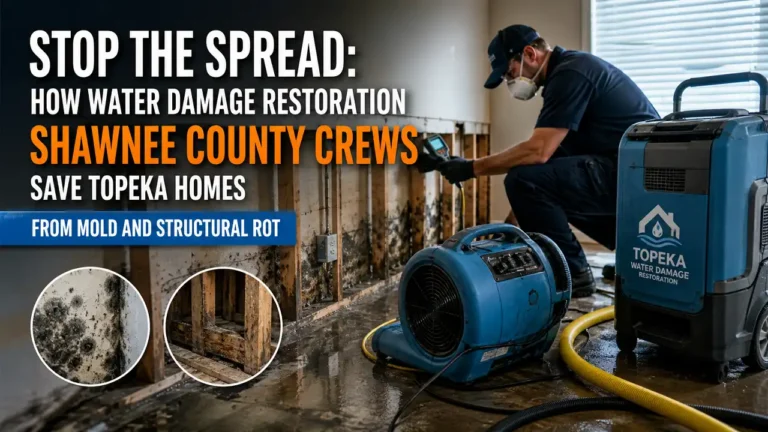
The fire is out, but the damage is still spreading. Acidic soot begins etching surfaces within minutes. Firefighting water soaks into drywall, subfloors, and insulation, and mold can follow within 24 to 48 hours. Fire damage mitigation Shawnee property owners can rely on focuses on stopping this secondary damage before it turns a repairable room into a full rebuild. Over the first few days, most of the cost comes from that secondary damage, not from the flames.
The real decision comes after the trucks leave. You can let the soot, water, and odor keep working on your home, or you can stop them. The first 72 hours decide which path your claim, your budget, and your structure take.
Key Takeaways
- Call for mitigation within 24 hours. Soot discolors plastics and grout within hours, and wet materials can grow mold within 24 to 48 hours.
- Firefighting water is a water damage event. We treat it as Category 2 or Category 3 water, which means extraction, structural drying, and antimicrobial treatment are required.
- Document everything before cleanup starts. Photos, moisture readings, and a mitigation scope protect your homeowners insurance claim from underpayment.
What Fire Damage Mitigation Involves
Fire damage mitigation stops ongoing damage after a fire. It is the emergency phase. Restoration and rebuild come later. Mitigation includes securing the structure, extracting firefighting water, controlling soot, drying framing, and neutralizing smoke odor at the source.
Most homeowners expect a fire job to be about burned materials. It isn’t. On recent emergency service calls in College Hill, we found the kitchen fire itself had damaged about 80 square feet. The water from the hose line had soaked through the subfloor, run along the joists, and saturated the finished basement below. The water damage was six times larger than the fire damage.
That is why residential fire damage mitigation shawnee homeowners need begins with water extraction and moisture mapping, not just soot cleaning.
Mitigation vs. Restoration: The Difference
| Phase | Goal | Typical Tasks | When It Happens |
|---|---|---|---|
| Mitigation | Stop further damage | Board-up, tarping, water extraction, drying, soot stabilization, odor control | First 0 to 7 days |
| Cleaning | Remove residue | HEPA vacuuming, dry sponge cleaning, wet cleaning, contents packout | Days 2 to 14 |
| Restoration | Return to pre-loss condition | Drywall, insulation, flooring, paint, cabinets, framing repair | Weeks 2 to 12+ |
The Five Core Mitigation Tasks
- Secure the structure with board-up and roof tarping to block weather, theft, and further water intrusion.
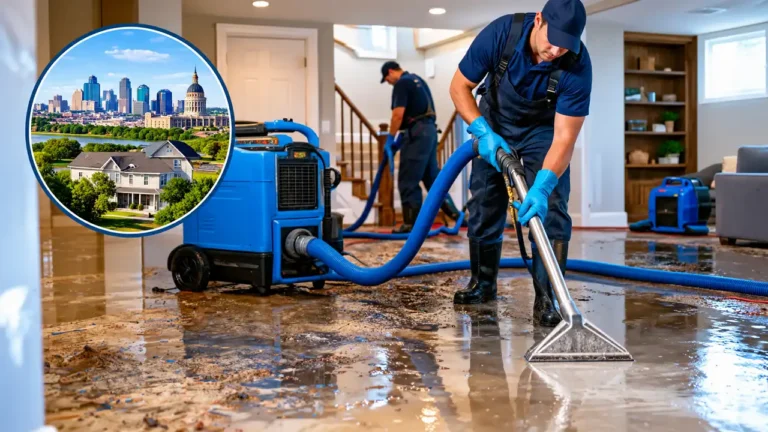
- Extract standing water from floors, carpet, and basements left by firefighting efforts.
- Stabilize soot using HEPA air scrubbers so residue stops migrating through HVAC ducts.
- Dry the structure with air movers and low-grain refrigerant (LGR) dehumidifiers, which pull moisture even at low humidity.
- Control odor at the source by removing charred materials before deodorizing.
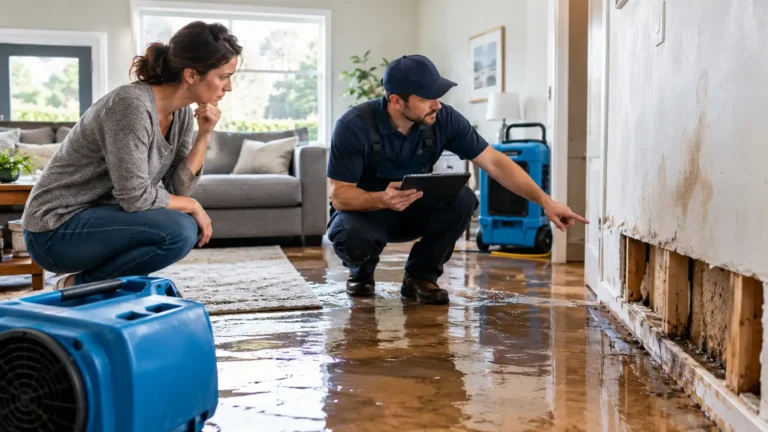
Your next step: walk the property with your adjuster or contractor and separate fire-damaged areas from water-damaged areas on a written list.
Immediate Steps to Take After a Fire in Shawnee County
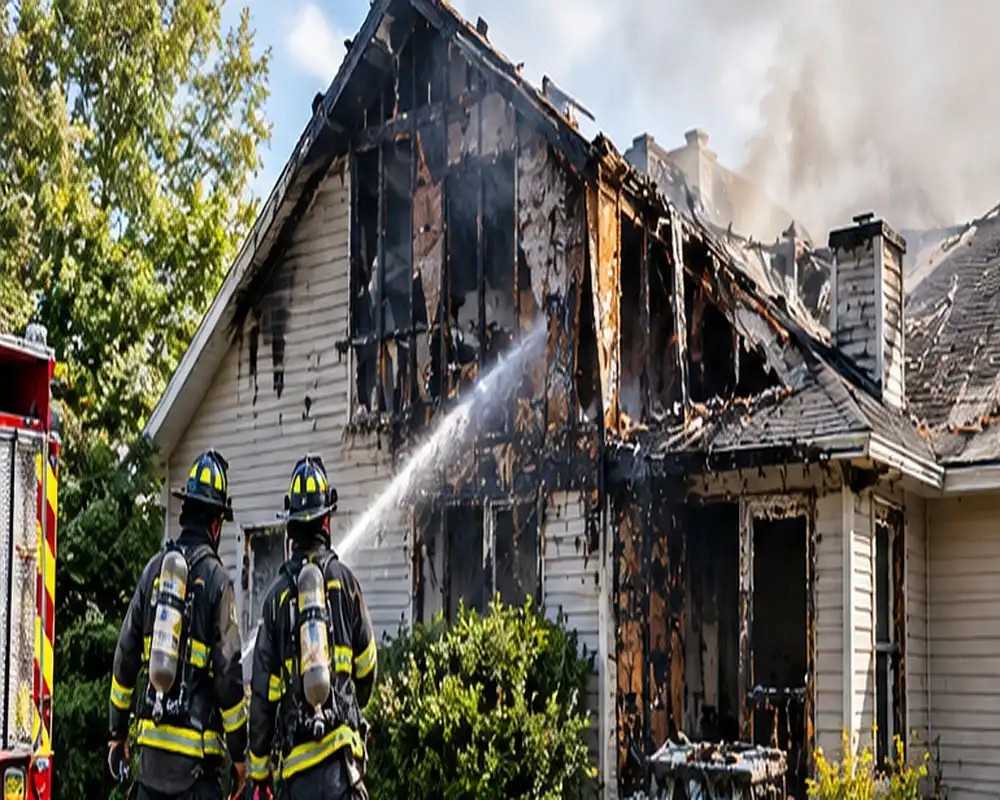
The first 24 hours set the cost of the entire job. Every hour of delay lets soot acids, standing water, and humidity do more harm. Safety comes first, then documentation, then mitigation.
We start fire damage mitigation shawnee jobs by confirming the fire department has released the property. Then we check electrical hazards, structural stability, and air quality before anyone enters.
Your First 24-Hour Checklist
- Confirm clearance from the fire marshal before you re-enter.
- Turn off utilities if the fire department has not already done so.
- Photograph every room before you move anything, including ceilings and closets.
- Call your insurance carrier and request a claim number.
- Call a mitigation contractor for board-up, extraction, and drying.
- Remove pets and people from smoke-affected rooms.
- Change your HVAC filter only after the system has been inspected for soot.
What NOT to Do
- Don’t wipe soot with a wet rag. It smears and pushes residue deeper into paint.
- Don’t run the HVAC system. It spreads soot to every room in the house.
- Don’t eat food exposed to heat, smoke, or firefighting water.
- Don’t turn on ceiling fans or electronics until an electrician checks them.
- Don’t start demolition before your adjuster documents the loss.
If you only remember one rule, keep the HVAC system off. Our restoration crews frequently encounter this in historic Westboro basements: a homeowner runs the furnace to “air out” the smell, and soot coats every duct in the house. That one mistake can add $1,500 to $4,000 in duct cleaning.
Your next step: save our number, (877) 679-6340, so you can schedule extraction and board-up before the water has time to soak in.
Fire Damage Severity and Water Category Classification
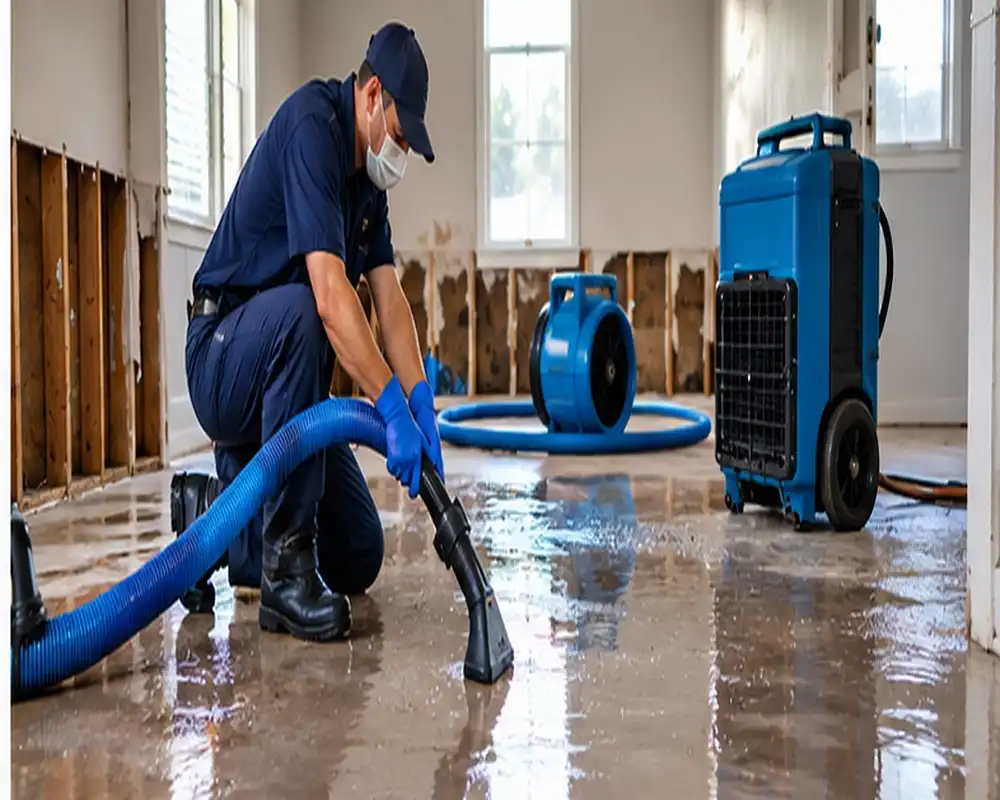
Severity classification drives your scope and your cost. Restoration professionals grade fire losses by how far heat, smoke, and water reached. Water from firefighting gets its own category based on contamination.
Accurate classification keeps fire damage mitigation shawnee estimates honest. It also gives your adjuster a clear, defensible scope.
Fire Damage Severity Levels
| Severity | What You See | Affected Area | Typical Mitigation Scope |
|---|---|---|---|
| Light | Light smoke film, faint odor | 1 room | Dry cleaning, deodorization, filter change |
| Moderate | Visible soot on walls and ceilings, damp areas | 2 to 4 rooms | Soot removal, water extraction, partial drywall removal |
| Heavy | Charred materials, heavy soot, saturated floors | Multiple rooms or 1 floor | Demolition, structural drying, contents packout |
| Severe/Structural | Burned framing, roof penetration, collapse risk | Whole structure | Board-up, shoring, full gut, engineering review |
Water Damage Category Comparison
| Category | Description | Fire Job Example | Required Response |
|---|---|---|---|
| Category 1 (Clean) | Sanitary water source | Sprinkler line break with no debris contact | Extract and dry |
| Category 2 (Gray) | Significant contamination | Hose water mixed with soot on floors | Extract, clean, antimicrobial, dry |
| Category 3 (Black) | Grossly contaminated | Hose water through burned insulation, debris, or standing 48+ hours | Remove porous materials, sanitize, dry, verify |
Firefighting water rarely stays clean. It picks up soot, ash, and burned debris as it moves through the structure. We treat it as Category 2 at minimum and upgrade to Category 3 when it contacts insulation or sits for more than 48 hours.
Your next step: ask your contractor which water category they assigned and why. Get the answer in writing.
Smoke Damage and Structural Drying Timelines
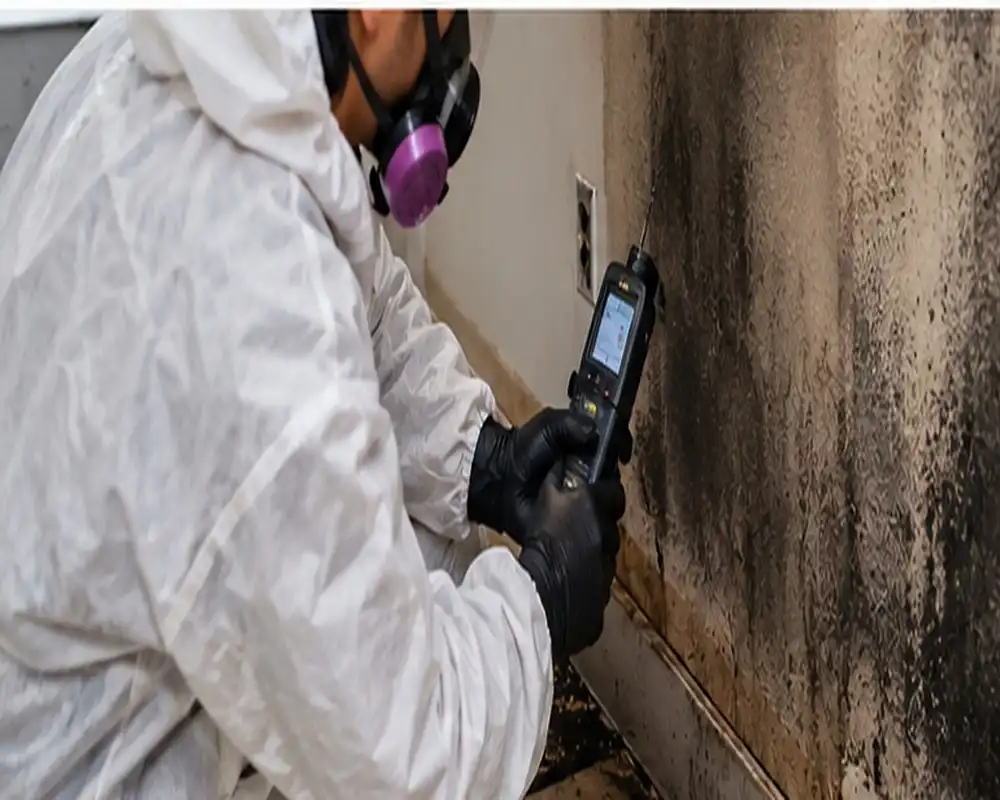
Soot damage follows a predictable clock. Soot is acidic. It begins discoloring and corroding surfaces almost immediately. Smoke residue also comes in different types, and each one needs a different cleaning method.
This timeline explains why fire damage mitigation shawnee property owners schedule within hours costs far less than cleanup started a week later.
How Soot Damage Progresses
| Time After Fire | What Happens to Your Home |
|---|---|
| Minutes | Plastics discolor, porous materials yellow, smoke odor sets in |
| Hours | Grout discolors, countertops stain, unprotected metals tarnish |
| Days | Walls yellow permanently, metals corrode, wood finishes need refinishing |
| Weeks | Glass etches, carpet discolors permanently, odor embeds in framing |
Smoke Residue Types
| Residue Type | Source | Characteristics | Cleaning Method |
|---|---|---|---|
| Dry smoke | Fast, hot fires (wood, paper) | Powdery, easier to remove | Dry sponge, HEPA vacuum |
| Wet smoke | Smoldering fires (plastic, rubber) | Sticky, smeary, pungent | Solvent cleaners, heavy degreasing |
| Protein residue | Kitchen and cooking fires | Nearly invisible, strong odor, yellows paint | Enzymatic cleaners, sealing |
| Fuel oil soot | Furnace puffback | Black, oily, spreads through ducts | Specialized degreasers, duct cleaning |
Structural Drying Timelines and Equipment Metrics
Firefighting water needs the same structural drying process as a flood. Drywall can look dry on the surface and still hold moisture behind the paint. We verify with pin and pinless moisture meters and thermal imaging.
| Equipment | Purpose | Typical Placement | Drying Target |
|---|---|---|---|
| Air movers | Evaporate surface moisture | 1 per 50 to 70 sq ft of wet floor, plus wall coverage | Surface dry in 24 to 72 hours |
| LGR dehumidifiers | Remove evaporated moisture from air | Sized to room volume and water category | Relative humidity below 50% |
| HEPA air scrubbers | Capture soot and particulates | Multiple air changes per hour in affected rooms | Clean, odor-reduced air |
| Hydroxyl generators | Break down odor molecules | Safe for occupied spaces | Odor reduction over 3 to 7 days |
| Moisture meters | Verify materials are dry | Daily readings on mapped points | Match unaffected “dry standard” readings |
| Material | Typical Drying Time |
|---|---|
| Carpet and pad (Category 2 only) | 1 to 3 days |
| Drywall | 2 to 4 days |
| Hardwood flooring | 5 to 14 days |
| Subfloor and framing | 3 to 7 days |
| Concrete basement slab | 5 to 10+ days |
If you’ve lived through a humid Topeka summer, this moisture containment protocol makes complete sense. Outdoor humidity in July and August slows drying, so we seal off rooms with poly containment and let the dehumidifiers work on a closed air volume.
Your next step: ask for daily moisture logs. They prove the structure is dry before anyone closes the walls.
Materials Mitigation: Salvage vs. Replace Guidelines
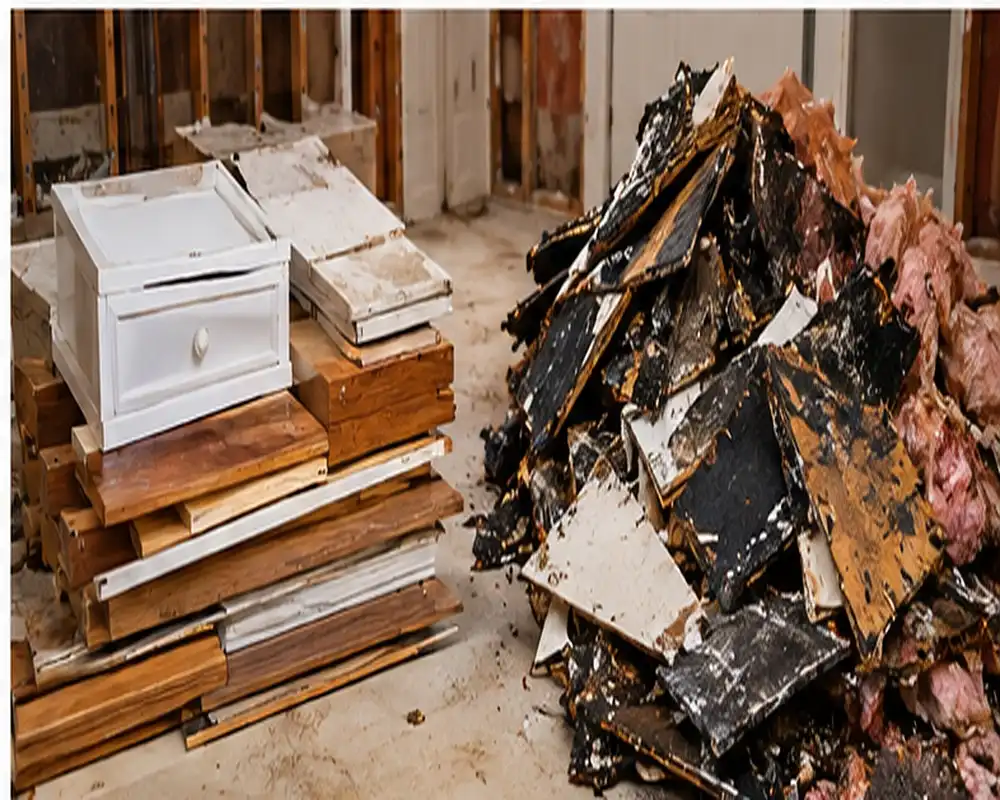
Some materials clean. Others must go. The decision depends on porosity, heat exposure, soot type, and water category. Saving materials that can be saved lowers your claim. Keeping materials that should go creates lingering odor and mold.
A solid residential fire damage mitigation shawnee plan makes these calls room by room, with photos to support each one.
| Material | Usually Salvageable When… | Replace When… |
|---|---|---|
| Drywall | Light smoke film only, dry | Charred, wet with Category 2/3 water, or heavy wet-smoke residue |
| Insulation | Rarely | Smoke-exposed or wet (it traps odor and moisture) |
| Carpet | Light dry smoke, Category 1 water | Wet with Category 3 water, melted, or heavy soot |
| Carpet pad | Almost never | Any water or smoke saturation |
| Hardwood floors | Surface soot, dried within days | Cupped, buckled, or charred |
| Cabinets (solid wood) | Soot on finish only | Delaminated, warped, or charred |
| Cabinets (particleboard) | Light smoke only | Any water exposure |
| Upholstered furniture | Light smoke, professional cleaning | Heavy wet smoke or contaminated water |
| Clothing and linens | Most smoke odor (specialty laundering) | Burned or Category 3 contact |
| Electronics | Inspected and cleaned by specialists | Heat-damaged or water-exposed |
| Framing lumber | Surface char under 1/4 inch, sealed | Deep char or structural weakening |
Pro/Con: Clean vs. Remove
Cleaning in place
- Pro: Lower cost and less demolition
- Pro: Faster return to the home
- Con: Odor can return if residue remains in porous materials
Removal and replacement
- Pro: Eliminates hidden soot and moisture
- Pro: Clean slate for odor sealing
- Con: Higher material and labor cost
When in doubt on porous materials, we recommend removal. A returning smoke smell in November is far more expensive than a sheet of drywall in October.
Your next step: request a written salvage list with photos before any material leaves your property.
Estimated Fire Damage Mitigation Costs in Shawnee, KS

Mitigation costs scale with severity, square footage, and water category. The figures below are estimated ranges for Shawnee County homes based on typical project scopes. Your actual price depends on an on-site inspection.
Understanding the fire damage mitigation shawnee cost picture early helps you check your insurance estimate and budget for your deductible.
| Service | Estimated Cost Range (Shawnee County) |
|---|---|
| Emergency board-up | $400 to $1,500 |
| Roof tarping | $300 to $1,200 |
| Firefighting water extraction | $1,000 to $5,000 |
| Structural drying (per day of equipment) | $250 to $800 |
| Soot and smoke cleaning | $1,000 to $6,000 |
| Smoke odor removal | $300 to $2,000 |
| HVAC duct cleaning (soot) | $500 to $4,000 |
| Contents packout and cleaning | $1,500 to $10,000+ |
| Antimicrobial treatment | $300 to $1,500 |
Total Mitigation Estimates by Severity
| Severity | Estimated Total Mitigation Cost |
|---|---|
| Light (single room, smoke only) | $1,000 to $4,000 |
| Moderate (multiple rooms, soot plus water) | $4,000 to $15,000 |
| Heavy (one floor, demolition needed) | $15,000 to $40,000 |
| Severe (whole structure) | $40,000 to $100,000+ |
What Drives Your Price Up
- Delayed response that allows mold or permanent soot staining
- Wet smoke residue from burned plastics
- Category 3 water requiring material removal
- Finished basements below the fire area
- Older homes with plaster walls and balloon framing (common in Potwin and College Hill)
At Topeka Water Damage Restoration, we provide free estimates and transparent, line-item pricing. You see what you’re paying for before work begins.
Your next step: compare your contractor’s line items against your adjuster’s estimate and flag any gaps.
Mold Risk After Firefighting Water Intrusion
Fire jobs become mold jobs when drying is delayed. Thousands of gallons of water can enter a home during firefighting. A single fire hose can flow well over 100 gallons per minute. That water ends up in wall cavities, subfloors, and basements.
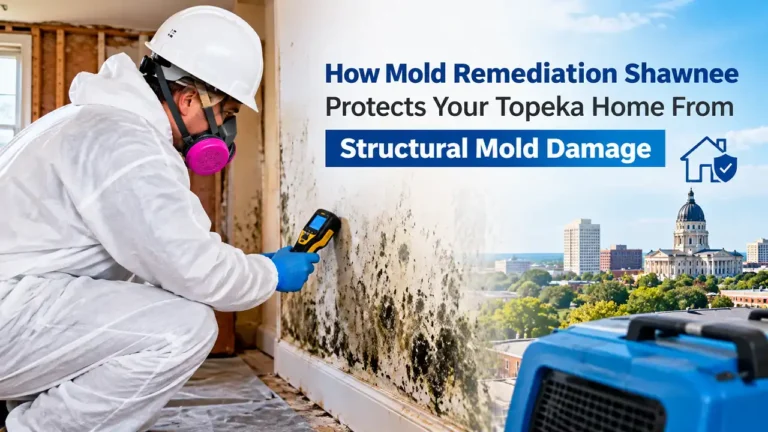
According to the U.S. Environmental Protection Agency’s mold guidance, the best way to control mold growth is to control moisture. The EPA advises drying wet materials within 24 to 48 hours to prevent growth. A fire damage mitigation shawnee plan that skips structural drying leaves this risk wide open.
Why Fire Jobs Grow Mold Fast
- Heat plus water creates warm, humid conditions inside wall cavities.
- Burned openings in roofs and windows let in rain and outdoor humidity.
- Soot and ash provide organic material on surfaces.
- Homeowners delay while waiting on insurance approval.
Mold Mitigation Checklist After a Fire
- Extract all standing water within the first 24 hours.
- Remove wet insulation and saturated drywall to expose cavities.
- Apply EPA-registered antimicrobials to framing and subfloors.
- Run LGR dehumidifiers inside sealed containment.
- Take daily moisture readings until materials match the dry standard.
- Inspect hidden areas with thermal imaging before reconstruction.
Our crews see this pattern on spring calls near Shunga Creek. A small kitchen fire, followed by a week of rain through a tarped roof, can turn into a full mold remediation. Fast drying prevents it.
Your next step: if any wall or ceiling still feels damp 48 hours after the fire, call for a moisture inspection today.
Insurance Claim Steps for Fire and Water Damage

Fire is covered differently than flood. Most standard homeowners policies cover sudden fire damage and the water used to extinguish it. The FEMA National Flood Insurance Program covers flood events, and FEMA notes that most homeowners insurance does not cover flood damage. Firefighting water is not a flood, so your homeowners policy handles it.
Knowing this distinction keeps your fire damage mitigation shawnee claim on the right policy from day one.
Step-by-Step Claim Process
- Report the loss to your carrier and get a claim number.
- Photograph and video every room, including ceilings, closets, and basement areas.
- Request the fire report from the responding fire department.
- Authorize emergency mitigation. Most policies require you to prevent further damage.
- Keep every receipt for hotels, meals, and emergency purchases (Additional Living Expenses coverage).
- Build a contents inventory with item, age, and estimated value.
- Meet the adjuster on-site with your mitigation contractor present.
- Review the estimate line by line before signing.
Coverage Quick Reference
| Damage Type | Homeowners Policy | NFIP Flood Policy |
|---|---|---|
| Fire and smoke | Typically covered | Not covered |
| Firefighting water | Typically covered | Not covered |
| Mold from prompt-reported fire loss | Often covered (limits vary) | Not applicable |
| Rising floodwater (Kansas River overflow) | Not covered | Covered |
| Additional living expenses | Typically covered | Not covered |
We document every job with moisture maps, photo logs, and drying records. That paperwork answers adjuster questions before they slow your claim.
Your next step: pull your policy’s declarations page and confirm your dwelling, contents, and ALE limits.
IICRC S700: The Fire Restoration Standard
IICRC S700 sets the professional standard for fire and smoke damage restoration. The Institute of Inspection, Cleaning and Restoration Certification (IICRC) publishes it alongside S500 for water damage and S520 for mold remediation. Together, they cover every phase of a fire loss.
| Standard | Covers | Why It Matters on a Fire Job |
|---|---|---|
| IICRC S700 | Fire and smoke damage restoration | Defines assessment, residue removal, and odor control |
| IICRC S500 | Professional water damage restoration | Governs extraction and drying of firefighting water |
| IICRC S520 | Professional mold remediation | Applies when drying is delayed and mold appears |
What S700-Aligned Work Looks Like
- Pre-cleaning assessment of residue type and surface material
- Testing cleaning methods on small areas before full application
- Source removal of charred materials before deodorization
- Engineering controls like HEPA filtration and containment
- Documentation of every step for the property owner and insurer
Standards protect you from shortcuts. Masking odor with fragrance, painting over soot, or skipping cavity drying all fall outside professional practice.
Your next step: ask any contractor which IICRC standards they follow and request proof of certification.
Topeka Water Damage Restoration Services Overview
Our core strength is water, and every fire job is a water job. At Topeka Water Damage Restoration, we handle the extraction, drying, and moisture control that firefighting leaves behind. You can view our full catalog on our services page.
| Service | What We Do | Fire-Related Use |
|---|---|---|
| 24/7 Emergency Water Extraction | Truck-mounted and portable extraction | Removing firefighting water |
| Structural Drying | Air movers, LGR dehumidifiers, moisture mapping | Drying framing, subfloors, wall cavities |
| Basement Flood Cleanup | Pumping, drying, sanitizing | Water that drained below the fire floor |
| Mold Removal | Containment, HEPA, antimicrobials | Preventing or treating post-fire mold |
| Sewage Remediation | Category 3 cleanup and disinfection | Contaminated water handling protocols |
| Burst Pipe Restoration | Leak response and repair | Pipes damaged by heat or freezing after a fire |
| Flood Cleanup | Storm and river flood response | Rain intrusion through fire-damaged roofs |
Why Property Owners Call Us
- 24/7 response, with crews typically on-site within 1 to 2 hours
- Advanced equipment: industrial pumps, thermal cameras, LGR dehumidifiers
- Transparent pricing with free estimates
- Plain-language updates at every stage
- Detailed documentation for your insurance claim
Your next step: call (877) 679-6340 for a free on-site assessment.
Service Area: Shawnee County and Surrounding Communities
We serve Shawnee County and nearby communities around the clock. Our crews know the local housing stock, from 1920s plaster homes in Potwin to newer builds in Sherwood. Local knowledge speeds up every fire damage mitigation shawnee call we take.
| Area | Common Property Challenges We See |
|---|---|
| Topeka | Mixed housing ages, finished basements |
| Westboro | Historic homes, older basements, plaster walls |
| College Hill | Balloon framing that spreads smoke between floors |
| Potwin | Century-old homes with original woodwork |
| NOTO Arts District | Mixed-use buildings and older commercial spaces |
| Highland Park | Older plumbing and slab moisture |
| Sherwood | Larger homes with full finished basements |
| Tecumseh | Rural properties, longer response distances |
| Auburn | Well and septic systems, detached structures |
| Berryton | Acreage homes and outbuildings |
FAQs
How soon should mitigation start after a fire?
Within 24 hours. Soot damages surfaces within hours, and wet materials can grow mold within 24 to 48 hours.
Can I stay in my home during mitigation?
It depends on severity and air quality. Light smoke jobs often allow occupancy. Heavy soot or Category 3 water usually requires temporary relocation.
Does smoke odor ever fully go away?
Yes, when the source is removed. Deodorizing alone fails if charred materials or soaked insulation remain.
Who pays for mitigation?
Most homeowners policies cover emergency mitigation for sudden fire losses. You pay your deductible.
How long does the drying phase take?
3 to 7 days for most fire-related water damage. Hardwood and concrete can take longer.
Act Within 24 Hours to Protect Your Home
Speed controls the outcome. The longer soot sits and water soaks, the more you replace instead of clean. Fast extraction, drying, and soot control keep your repair scope small and your claim clean.
We answer 24 hours a day, 7 days a week. Our crews arrive with extraction equipment, moisture meters, and a documented plan.
Call Topeka Water Damage Restoration now at (877) 679-6340 to schedule emergency extraction and a free on-site estimate.