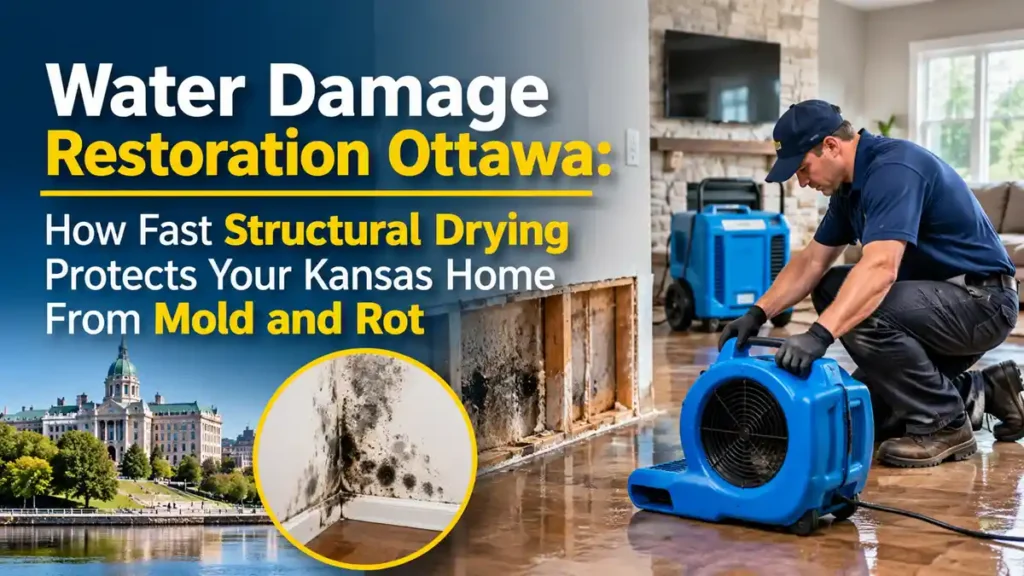
Water inside a home does its worst damage in the first 48 hours. A burst supply line, a failed sump pump, or a storm-flooded basement soaks drywall, swells subfloors, and sets up mold growth before most homeowners finish their first insurance call. Professional water damage restoration Ottawa homeowners can rely on is a timed process: extract the water, measure the moisture, and dry the structure to verified targets. Get that sequence right and you save flooring, framing, and thousands of dollars. Get it wrong and the damage keeps spreading behind your walls long after the carpet feels dry.
Keys
- Act within 24 to 48 hours: Mold can begin growing on wet drywall, carpet pad, and wood framing in that window, and clean water can degrade into contaminated water in the same timeframe.
- Know your water category: Category 1 (clean), Category 2 (gray), and Category 3 (black) water each require different cleaning, safety gear, and salvage decisions.
- Dry to numbers, not touch: Restoration ends when moisture meter readings match the dry standard for each material, which takes 3 to 5 days for most residential losses.
How Sewage Cleanup Overland Park Crews Protect Your Home From Structural Mold Damage
Why Ottawa, Kansas Properties Face Unique Water Risks
Ottawa homes face three distinct water threats: river flooding, winter pipe failures, and spring storm runoff. The Marais des Cygnes River runs through town, and the 2007 flood pushed river water into Ottawa neighborhoods and basements. Older homes near downtown often sit on aging stone or block foundations that let groundwater seep in during heavy rain.
Winter brings a separate problem. Sub-zero cold snaps split supply lines in exterior walls and unheated crawl spaces. Kansas clay soils also hold water against foundations, which drives seepage through floor cracks and the cove joint (the seam where the basement wall meets the floor).
Our restoration crews frequently encounter this in historic Westboro basements in Topeka, and we see the same pattern in Ottawa’s older housing stock. The building materials are similar, and so is the way water travels through them.
| Ottawa Water Threat | Peak Season | Typical Damage | Water Category |
|---|---|---|---|
| Marais des Cygnes River flooding | Spring, early summer | Basements, crawl spaces, ground floors | Category 3 |
| Frozen and burst pipes | December to February | Walls, ceilings, insulation | Category 1 (at first) |
| Storm runoff and seepage | April to June | Finished basements, carpet, drywall | Category 2 or 3 |
| Sump pump failure | Spring storms, power outages | Basement floors and walls | Category 2 or 3 |
| Sewer backup | Heavy rain events | Floor drains, lower levels | Category 3 |
If river or storm water has entered your home, our flood cleanup crews extract it first and then treat the area as contaminated until testing and cleaning prove otherwise. Your next step: locate your main water shutoff and sump pump today, before the next storm forces you to find them in the dark.
Water Damage Categories: Clean, Gray, and Black Water
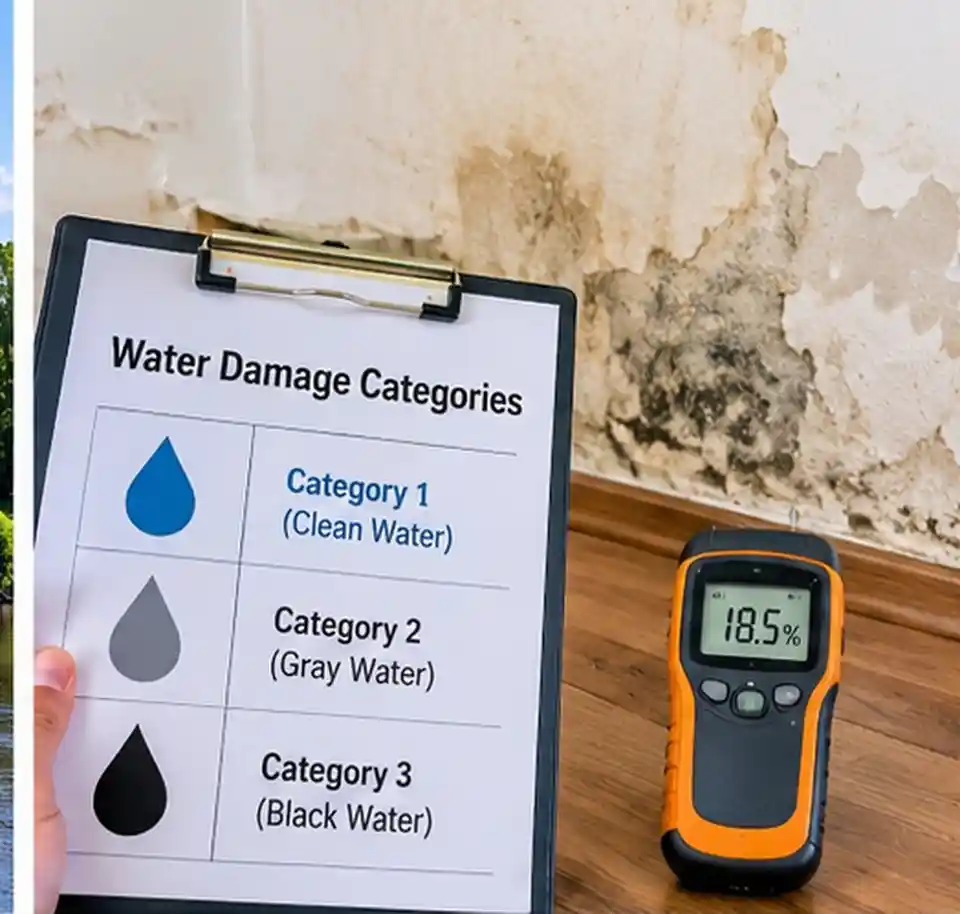
Water category determines how a loss gets cleaned and what can be saved. The IICRC (Institute of Inspection Cleaning and Restoration Certification) sets the industry standard, called IICRC S500, which sorts water into three categories by contamination level. Category is not permanent: water gets dirtier the longer it sits.
Water Damage Category Comparison
| Factor | Category 1: Clean Water | Category 2: Gray Water | Category 3: Black Water |
|---|---|---|---|
| Common sources | Burst supply line, overflowing sink, rain through a window | Washing machine discharge, dishwasher leak, toilet overflow (urine only) | Sewage backup, river flooding, toilet overflow with feces, storm runoff |
| Health risk | Low | Moderate (can cause illness if ingested) | High (bacteria, viruses, chemicals) |
| Degrades in | 24 to 48 hours into Category 2 | 48 hours into Category 3 | Already highest level |
| Carpet pad | Often dried and saved | Usually replaced | Always replaced |
| Carpet | Often saved | Sometimes saved with cleaning | Replaced |
| Drywall | Often dried in place | Cut out if heavily soaked | Removed at least 2 feet above the waterline |
| Protective gear | Gloves | Gloves, eye protection | Full PPE and respirator |
| Antimicrobial treatment | Optional | Recommended | Required |
Water Damage Classes (Evaporation Load)
Class measures how much water soaked into materials. It drives how much drying equipment the job needs.
| Class | What It Means | Example |
|---|---|---|
| Class 1 | Small area, low-porosity materials wet | Leak wets part of a vinyl floor |
| Class 2 | Whole room wet, water wicked up walls under 24 inches | Burst pipe soaks carpet and lower drywall |
| Class 3 | Water came from above, ceilings and walls saturated | Upstairs bathroom leak through a ceiling |
| Class 4 | Specialty drying for dense materials | Soaked hardwood, plaster, or concrete |
A burst pipe starts as Category 1, then turns into a contamination problem once it sits on dirty floors or carpet pad for two days. Your next step: photograph the water source before cleanup begins, because the source decides your category and often your insurance coverage.
Warning Signs You Need Water Damage Restoration
Hidden water damage shows itself through stains, smells, and changes in texture. Many Ottawa homeowners only notice a problem after moisture has spread through wall cavities, subfloors, or ceiling insulation. A leak inside a wall can run for weeks before any visible sign appears.
Watch for these signs:
- Musty odor in basements, closets, or under sinks
- Ceiling stains, bubbling paint, or sagging drywall
- Cupped or buckled hardwood and laminate floors
- Swollen baseboards or trim pulling away from walls
- Damp carpet near exterior walls after rain
- Efflorescence (white, chalky mineral deposits) on basement walls
- A water meter that keeps moving when every fixture is off
- Rising water bills with no change in household use
On recent emergency service calls in College Hill, we traced a “small” ceiling stain to a supply line that had dripped into insulation for over a month. The drywall looked fine. The framing behind it was already showing early mold.
Your next step: check your water meter tonight with all fixtures off, and call a pro if the dial moves.
Steps to Stop Water From Spreading
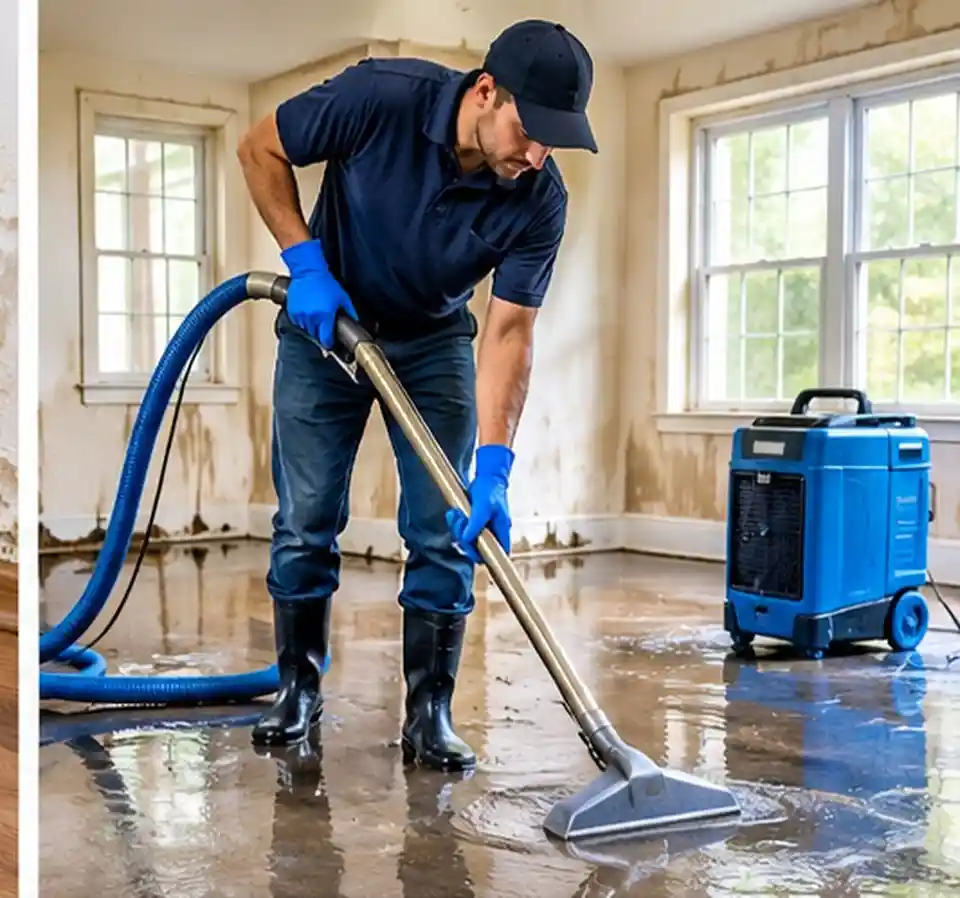
Stopping the source comes before everything else. Every minute water keeps flowing, it moves deeper into porous materials like drywall, carpet pad, and wood subfloors. Take these steps only when it is safe to do so.
- Shut off the main water valve. Most Ottawa homes have it in the basement near the front foundation wall or at the water heater.
- Cut power to wet areas. Flip the breaker for affected rooms. Never stand in water to reach the panel.
- Stay out of standing water near outlets, appliances, or extension cords.
- Move valuables up and out. Lift rugs, electronics, photos, and documents to a dry room.
- Photograph everything. Capture the source, the waterline, and damaged items for your claim.
- Remove light standing water with towels or a wet vac if the water is clean (Category 1).
- Leave contaminated water alone. Sewage and floodwater require protective gear and professional cleanup.
- Open interior doors to let air move, but keep windows closed in humid weather.
- Call a restoration company. Professional extraction removes far more water than household tools.
Do not use a household vacuum on water, and do not turn on ceiling fans if the ceiling below is wet or sagging. Your next step: save our number in your phone now so you are not searching for it during an emergency.
Our Step-by-Step Emergency Response Process
Professional restoration follows a fixed sequence that protects each stage of the job. At Topeka Water Damage Restoration, we answer calls 24/7 and aim to reach Topeka-area properties within 60 minutes. Ottawa sits about an hour south, so our crews dispatch immediately and give you safety steps over the phone while they drive.
- Answer and assess. We ask about the source, the area affected, and how long the water has been present.
- Inspect and classify. Technicians identify the water category and class on arrival.
- Stop the source. We shut off supply lines or coordinate with a plumber for repairs.
- Extract standing water. Truck-mounted and portable units handle water extraction from carpet, pad, and floors.
- Map the moisture. Moisture meters and thermal imaging cameras find water behind walls, under floors, and above ceilings.
- Remove unsalvageable materials. We cut out soaked pad, drywall, and insulation based on category and readings.
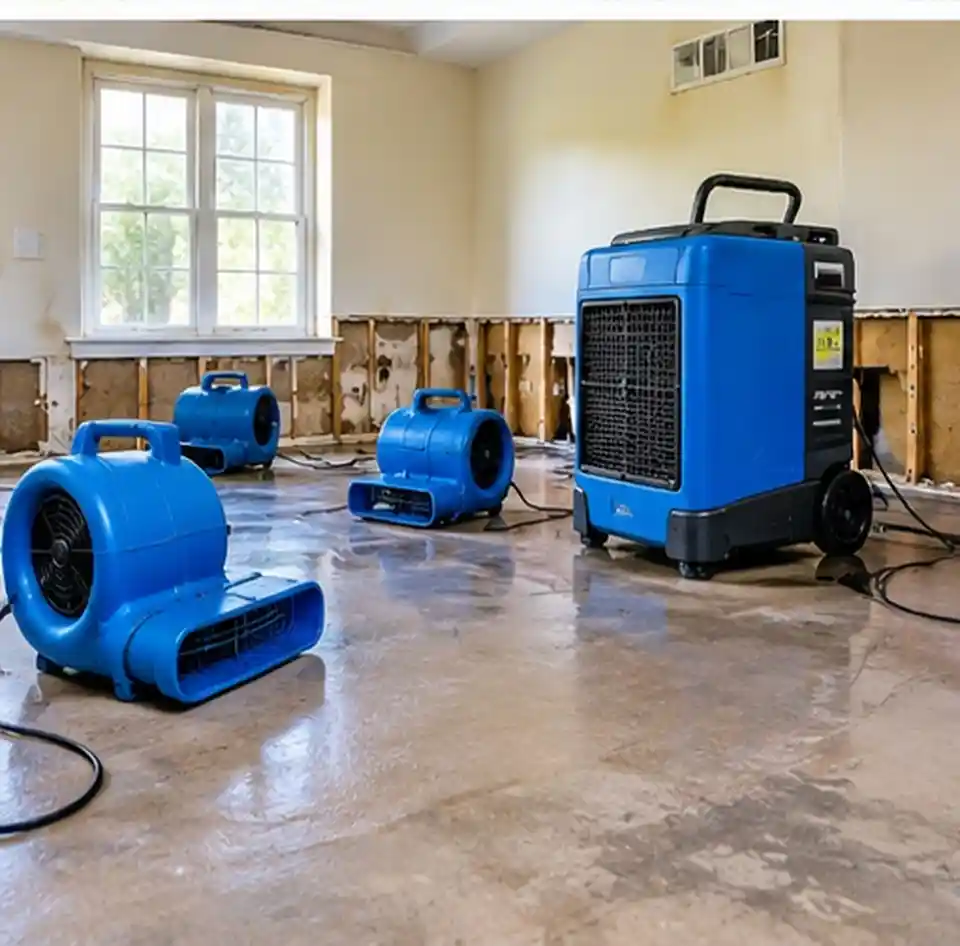
- Set up drying equipment. Air movers and dehumidifiers go in based on room size and class.
- Apply antimicrobial treatment. Required for Category 2 and 3 losses.
- Monitor daily. We record readings every day and adjust equipment until targets are met.
- Document for insurance. Photos, moisture logs, and a written scope go to you and your adjuster.
- Repair and rebuild. Drywall, flooring, and trim get replaced once the structure is dry.
Our Full Service Catalog
| Service | When You Need It |
|---|---|
| Water extraction | Standing water on floors or in carpet |
| Water removal | Large volumes from any room |
| Flood cleanup | River, storm, or surface water intrusion |
| Basement water removal | Seepage, cove joint leaks, flooded finished basements |
| Sewage cleanup | Sewer backups and Category 3 contamination |
| Burst pipe water damage | Frozen or failed supply lines |
| Structural drying | Wet framing, subfloors, and wall cavities |
| Mold remediation | Visible growth or musty odors after a leak |
| Toilet overflow cleanup | Bathroom floods, often Category 2 or 3 |
| Sump pump failure cleanup | Pump failures during storms or power outages |
We serve Westboro, College Hill, Potwin, NOTO Arts District, Highland Park, and Sherwood in Topeka, plus Tecumseh, Auburn, and Berryton. Ottawa properties get the same equipment, crews, and documentation standards. Your next step: when you call any restoration company, ask whether they will provide daily moisture readings in writing.
Structural Drying Timelines and Equipment Metrics
Structural drying removes moisture from building materials, not just from the air. It relies on three tools working together: air movers to push air across wet surfaces, dehumidifiers to pull moisture out of the air, and moisture meters to prove materials are dry. Most residential losses take 3 to 5 days to dry before repairs begin.
Our structural drying teams set equipment by room size, water class, and material type, then adjust daily based on readings.
Structural Drying Timelines
| Loss Type | Typical Drying Time | What Extends It |
|---|---|---|
| Category 1, Class 1 (small clean leak) | 1 to 3 days | Delayed response |
| Category 1, Class 2 (burst pipe, one room) | 3 to 4 days | Wet subfloor or pad |
| Category 2 (appliance or toilet overflow) | 3 to 5 days | Material removal, cleaning |
| Class 3 (ceiling and walls saturated) | 4 to 6 days | Insulation, multiple floors |
| Class 4 (hardwood, plaster, concrete) | 5 to 14+ days | Dense materials, specialty mats |
| Category 3 flood (river, sewage) | 5 to 10 days plus rebuild | Demolition, disinfection |
Equipment Metrics
| Equipment | Purpose | Typical Placement |
|---|---|---|
| Air movers | Speed evaporation from surfaces | About 1 per 10 to 16 linear feet of wet wall |
| LGR dehumidifiers (low grain refrigerant) | Pull moisture from air at lower humidity | 1 per room or per 1,000 to 1,500 sq ft, sized by class |
| Desiccant dehumidifiers | Dry dense materials and cold spaces | Basements, hardwood, winter losses |
| Hardwood floor mats | Pull water from under wood flooring | Class 4 hardwood losses |
| Wall cavity injection systems | Push dry air inside wall cavities | Behind finished walls and cabinets |
| Thermal imaging camera | Find hidden moisture | Initial mapping and daily checks |
| Pin and pinless moisture meters | Measure moisture content | Every affected material, every day |
Drying Targets We Measure
| Material | Dry Standard Target | How We Measure |
|---|---|---|
| Wood framing and subfloor | 15% or lower moisture content | Pin meter |
| Hardwood flooring | Within 2 to 4% of unaffected wood in the home | Pin meter, compared to a dry reference |
| Drywall | Matches unaffected drywall readings | Pinless meter |
| Concrete | Matches dry reference area | Specialty meter |
| Indoor relative humidity | Below 50% | Thermo-hygrometer |
If you’ve lived through a humid Topeka summer, this moisture containment protocol makes complete sense. Northeast Kansas air in July can hold so much moisture that opening windows adds water to a drying room. We keep the space closed and let dehumidifiers do the work. Your next step: ask your restoration company for the dry standard they are drying each material to, and request the daily log.
Estimated Repair Costs in Ottawa, KS
Water damage costs depend on water category, square footage, materials affected, and response time. Pricing for water damage restoration Ottawa cost estimates tracks closely with Topeka pricing, with a possible travel or mobilization charge for the drive south. Clean water caught early costs a fraction of a black water flood.
The ranges below reflect typical 2026 northeast Kansas pricing. Your estimate will vary by site conditions.
Water Damage Burlington: How Rapid Drying Protects Your Kansas Home From Mold and Structural Failure

Estimated Repair Costs
| Project Type | Typical Cost Range | Main Cost Drivers |
|---|---|---|
| Small Category 1 leak (one room) | $1,000 to $3,500 | Extraction, 3 days of drying |
| Burst pipe, multiple rooms | $3,000 to $8,000 | Drywall removal, ceiling damage |
| Finished basement flood (Category 2) | $4,000 to $12,000 | Carpet, pad, drywall, cleaning |
| Sewage backup cleanup (Category 3) | $3,500 to $15,000 | Demolition, disinfection, PPE |
| River or storm flood, whole level | $10,000 to $50,000+ | Full gut, rebuild, contents |
| Mold remediation (after water damage) | $1,500 to $6,000 | Containment size, materials removed |
| Sump pump failure cleanup | $2,000 to $7,500 | Water depth, basement finishes |
Per-Square-Foot Pricing by Category
| Water Category | Approximate Cost per Sq Ft | Notes |
|---|---|---|
| Category 1 | $3 to $7 | Lowest when caught within 24 hours |
| Category 2 | $4 to $9 | Added cleaning and antimicrobial |
| Category 3 | $7 to $15+ | Removal, disinfection, full PPE |
Equipment Daily Rates
| Equipment | Typical Daily Rate |
|---|---|
| Air mover | $25 to $40 per unit |
| LGR dehumidifier | $70 to $150 per unit |
| Desiccant dehumidifier | $150 to $300 per unit |
| Air scrubber (HEPA) | $60 to $125 per unit |
About “Free” Restoration Offers
Searches for free water damage restoration Ottawa usually lead to two real things: free estimates and insurance-covered work. The restoration itself is not free. If your policy covers the loss, you pay your deductible and your insurer pays the approved scope. We provide free estimates and clear written pricing before any work begins.
Your next step: request a line-item estimate that separates extraction, equipment days, demolition, and rebuild costs.
Materials Mitigation: Salvage vs. Replace Guidelines
Salvage decisions depend on water category, material type, and how long the material stayed wet. Porous materials absorb contaminants and hold moisture, so they get replaced more often. Non-porous materials like tile, metal, and sealed concrete usually clean and dry well.
Salvage vs. Replace Table
| Material | Category 1 (Clean) | Category 2 (Gray) | Category 3 (Black) |
|---|---|---|---|
| Carpet | Salvage if dried within 48 hours | Clean and evaluate | Replace |
| Carpet pad | Salvage if dried fast | Replace | Replace |
| Drywall | Salvage if no swelling or sagging | Replace if heavily soaked | Replace 2 feet above waterline |
| Fiberglass insulation | Replace if saturated | Replace | Replace |
| Hardwood floors | Salvage with specialty drying | Evaluate | Replace |
| Laminate flooring | Usually replace (swells easily) | Replace | Replace |
| Particleboard cabinets | Replace if swollen | Replace | Replace |
| Solid wood cabinets | Salvage | Clean and salvage | Evaluate, often replace |
| Wood framing | Salvage (dry in place) | Clean and dry | Clean, disinfect, dry |
| Ceramic tile | Salvage | Salvage | Clean and disinfect |
| Upholstered furniture | Salvage if dried fast | Professional cleaning | Replace |
| Mattresses | Evaluate | Replace | Replace |
| Paper documents and photos | Freeze and restore | Freeze and restore | Discard most |
Pros and Cons of Drying in Place
Pros:
- Lower material costs and less demolition
- Faster return to normal use
- Less waste and construction mess
Cons:
- Requires daily readings to confirm drying
- Not safe for Category 3 water
- Hidden moisture can feed mold if monitoring stops early
A finished basement in Ottawa soaked by river water is a different job from the same basement wet from a burst pipe. The first means demolition. The second often means drying in place. Your next step: before anyone cuts drywall, ask the technician to show you the moisture readings that justify the removal.
Mold Prevention Protocols After Water Damage
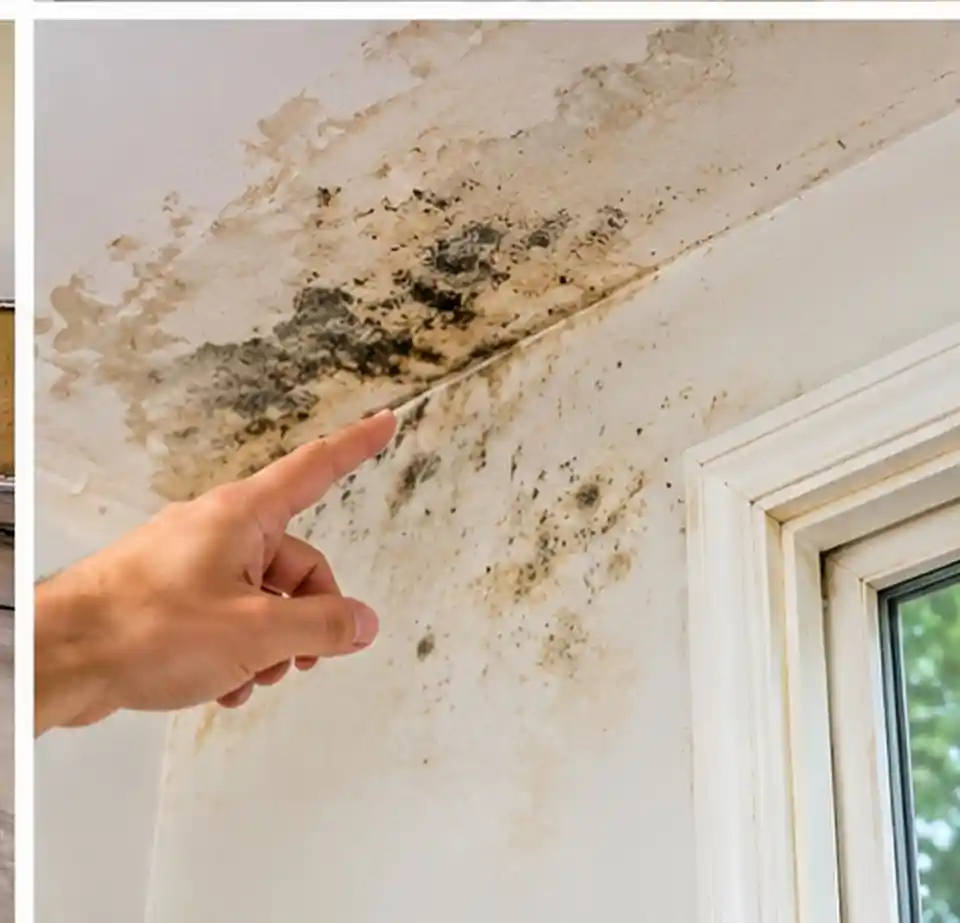
Mold prevention after water damage comes down to one rule: remove moisture fast. According to the EPA’s mold and moisture guidance, the best way to control mold growth is to control moisture. Mold spores exist everywhere. They only become a problem when they land on wet organic material like drywall paper, wood, or carpet backing.
The CDC’s mold health guidance recommends drying a home within 24 to 48 hours after a flood and keeping indoor humidity no higher than 50%. The CDC also notes that mold exposure can cause stuffy noses, coughing, wheezing, and more severe reactions in people with asthma or weakened immune systems.
Mold Mitigation Checklist
- Extract all standing water within the first 24 hours.
- Remove wet porous materials that cannot dry within 48 hours.
- Run dehumidifiers to bring relative humidity below 50%.
- Apply antimicrobial treatment to framing and subfloors in Category 2 and 3 losses.
- Set up containment with plastic sheeting and negative air pressure if mold is already visible.
- Run HEPA air scrubbers to capture airborne spores.
- Verify dryness with moisture meters before closing walls.
- Fix the moisture source so the problem does not return.
Mold Containment Levels
| Mold Area | Response |
|---|---|
| Under 10 sq ft | Cleanup with proper gear, fix moisture source |
| 10 to 100 sq ft | Limited containment, HEPA filtration, trained technicians |
| Over 100 sq ft | Full containment, negative air, professional mold remediation |
The CDC does not recommend routine mold testing. Visible mold or a musty smell is reason enough to act. Testing does not change the fix: remove the mold and stop the moisture.
If growth has already started, our mold remediation crews set up containment before removing any affected material. Your next step: buy a $15 hygrometer for your basement and keep it below 50% humidity year-round.
Insurance Claim Steps for Water Damage
Insurance coverage depends on the source of the water, not just the damage it caused. Standard homeowners policies usually cover sudden and accidental events like a burst pipe. They typically exclude gradual leaks, surface flooding, and sewer backups unless you carry specific coverage.
What Is Usually Covered
| Water Source | Standard Homeowners Policy | Coverage Needed |
|---|---|---|
| Burst pipe (sudden) | Usually covered | Standard policy |
| Appliance failure (sudden) | Usually covered | Standard policy |
| Slow leak over weeks | Usually excluded | Maintenance issue |
| River or surface flooding | Excluded | NFIP or private flood policy |
| Sewer backup | Usually excluded | Sewer backup endorsement |
| Sump pump failure | Usually excluded | Sump pump endorsement |
Homes near the Marais des Cygnes need separate flood insurance. The National Flood Insurance Program, run by FEMA, generally has a 30-day waiting period before a new policy takes effect.
Insurance Claim Steps
- Stop the source and prevent further damage (insurers expect this).
- Photograph and video all damage before cleanup begins.
- Call your insurer to open a claim and get a claim number.
- Hire a restoration company to start mitigation right away.
- Keep damaged items until the adjuster sees them, or document them fully.
- Request moisture logs and a written scope from your restorer.
- Save every receipt for hotels, meals, and emergency purchases.
- Meet the adjuster on site and walk through the damage together.
- Review the settlement against your contractor’s estimate before signing.
We document every job with photos, daily readings, and a written scope your adjuster can review. Your next step: pull up your policy today and search it for the words “sewer backup” and “flood.”
How to Choose the Best Restoration Company in Ottawa
The right restoration company combines certification, speed, and clear documentation. Searching for the best water damage restoration Ottawa option starts with credentials. The IICRC certifies technicians in Water Damage Restoration (WRT) and Applied Structural Drying (ASD), and its global locator lets you verify a firm’s status.
What to Check Before You Hire
- IICRC-certified technicians on the job
- 24/7 availability with a live person answering
- Written estimates before work begins
- Daily moisture logs shared with you
- Insurance documentation support
- Local experience with Kansas basements and clay soils
- Licensed and insured for Kansas work
Reading Reviews the Right Way
Online water damage restoration Ottawa reviews tell you more than star ratings. Look for these details:
| Review Detail | What It Tells You |
|---|---|
| Response time mentioned | Whether they actually arrive fast |
| Insurance experience | Whether they help with claims |
| Communication praised | Whether you get updates during drying |
| Mold follow-up issues | Whether drying was finished properly |
| Pricing comments | Whether final bills matched estimates |
A strong residential water damage restoration Ottawa provider earns reviews that mention specific crew members, clear explanations, and no surprise charges. Your next step: verify any company’s certification through the IICRC locator before they set up a single fan.
Frequently Asked Questions
How fast should I call for help after water damage?
Call immediately. Mold can start in 24 to 48 hours, and clean water degrades into contaminated water in that same window.
How long does water damage restoration take?
Drying takes 3 to 5 days for most homes. Repairs follow and depend on the scope of damage.
Can I dry water damage myself?
Small Category 1 spills, yes. Household fans cannot reach moisture inside walls or under floors, so larger losses need professional equipment and moisture meters.
Do you serve Ottawa, KS?
Yes. Our crews cover Ottawa and the surrounding area, along with Topeka, Tecumseh, Auburn, and Berryton, with 24/7 dispatch.
Is sewage water dangerous?
Yes. Sewage is Category 3 water carrying bacteria and viruses. Stay out of it and let trained crews handle cleanup.
Will my homeowners insurance cover a flooded basement?
It depends on the source. A burst pipe is often covered. Flooding and sewer backups usually require separate coverage.
How do you know when my walls are dry?
We measure them. Drying ends when meter readings match the dry standard for each material.
Does water damage always lead to mold?
No. Fast extraction and drying below 50% humidity prevent most mold growth.
What does water damage restoration cost in Ottawa?
Small clean-water losses start around $1,000. Sewage and flood losses can reach $15,000 or more. We provide free estimates.
Protect Your Ottawa Property Before the Next Storm
Fast, measured drying separates a three-day repair from a full gut renovation. Category, class, response time, and verified moisture readings decide whether your floors and walls survive. Ottawa’s river, clay soils, and hard winters make that timing even more important.
At Topeka Water Damage Restoration, we bring 24/7 response, transparent pricing, and plain-language explanations to every loss. Professional water damage restoration Ottawa families trust starts with one call and a written plan. If water is spreading right now, shut off the main valve, cut power to wet rooms, and call our emergency line at (877) 679-6340 for immediate dispatch.