
Water does its worst damage in the first 48 hours. A burst supply line can release hundreds of gallons in an hour. That water soaks into drywall, subfloors, and framing before you finish calling your insurance agent. Fast, professional water damage restoration Topeka KS service is what separates a three-day drying job from a gutted basement and a mold problem.
This guide shows you what to do in the first hour, how drying works, what repairs cost locally, and how to protect your insurance claim.
Key Takeaways
- Act within 24 to 48 hours. The EPA notes that drying wet materials in this window is the most reliable way to prevent mold growth.
- Identify the water category first. Clean water (Category 1) and black water (Category 3) require completely different cleanup protocols, safety gear, and salvage decisions.
- Document everything before cleanup. Photos, video, and moisture readings are the backbone of a successful insurance claim.
Emergency Response: What to Do in the First 60 Minutes
The first hour decides how much you lose. Every minute of standing water pushes moisture deeper into porous materials like drywall, carpet pad, and wood framing.
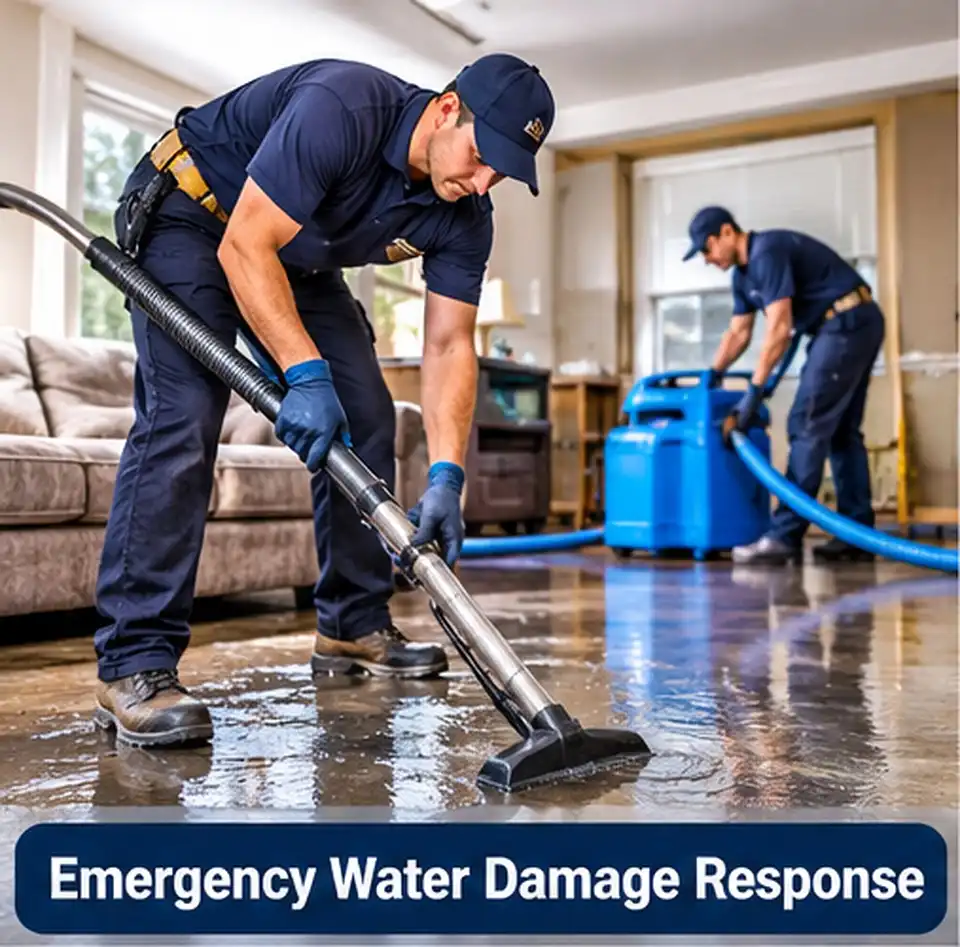
Your goal is simple: stop the source, stay safe, and limit the spread.
Steps to Stop Water Spreading
- Shut off the main water valve. In most Topeka homes, it sits in the basement near the front foundation wall or in a crawlspace.
- Cut power to affected areas. Flip the breaker only if you can reach the panel without standing in water.
- Move valuables off the floor. Lift electronics, documents, and furniture onto blocks or move them to a dry room.
- Place aluminum foil or wood blocks under furniture legs. This prevents rust stains and wicking into carpet.
- Photograph the damage. Capture wide shots and close-ups before you touch anything.
- Remove standing water you can safely reach. Use towels, mops, or a wet/dry vacuum for clean water only.
- Call a certified restoration crew. Professional extraction equipment removes far more water than household tools.
What Not to Do
- Do not use a household vacuum on wet floors. It creates an electrical hazard.
- Do not turn on ceiling fans if the ceiling is wet or sagging.
- Do not touch sewage water without gloves, boots, and eye protection.
- Do not wait for “it to dry on its own.” Hidden moisture behind walls stays wet for weeks.
How Our Emergency Response Works
Our dispatch line runs 24/7/365. When you call, we follow a set sequence:
| Time After Your Call | What Happens |
|---|---|
| 0 to 15 minutes | Dispatcher gathers details, gives safety instructions, assigns a crew |
| 30 to 90 minutes | Technicians arrive on-site across Topeka, Tecumseh, Auburn, and Berryton |
| First 2 hours | Moisture mapping, category assessment, photo documentation |
| Hours 2 to 6 | Truck-mounted extraction, removal of unsalvageable materials, equipment setup |
| Days 1 to 5 | Daily moisture readings, equipment adjustments, drying log updates |
When you search for water damage restoration near me Topeka KS at 2 a.m., response time is the first thing to ask about. Save our number in your phone today so you are not searching during an emergency.
Water Damage Categories: Know What You Are Dealing With
Water category determines your cleanup protocol. The IICRC (Institute of Inspection, Cleaning and Restoration Certification, the body that writes the industry’s standards) defines three categories in its S500 Standard for Professional Water Damage Restoration. Each category reflects the contamination level of the water, not the amount.
Water Damage Category Comparison
| Factor | Category 1: Clean Water | Category 2: Gray Water | Category 3: Black Water |
|---|---|---|---|
| Common sources | Burst supply lines, broken faucets, rainwater, ice maker lines | Washing machine overflow, dishwasher leaks, toilet overflow (urine only) | Sewage backup, river flooding, toilet overflow with feces, groundwater |
| Health risk | Low | Moderate: can cause illness if ingested | High: contains bacteria, viruses, and pathogens |
| Carpet salvage | Usually salvageable | Carpet often salvageable, pad usually replaced | Carpet and pad must be removed |
| Drywall | Dry in place if caught early | Often dried, may need cutting | Flood cut required (remove 2 feet above water line) |
| Protective gear | Basic gloves | Gloves, boots, eye protection | Full PPE: respirator, suit, boots, gloves |
| Antimicrobial treatment | Optional | Recommended | Required |
| DIY safe? | Small areas, yes | Limited | No |
Clean water does not stay clean. After 24 to 48 hours of contact with building materials and warm temperatures, Category 1 water can degrade into Category 2 or 3. That is why speed matters even for a “simple” supply line break.
Check Also: Water Damage Burlington: How Rapid Drying Protects Your Kansas Home From Mold and Structural Failure
Water Damage Classes: How Much Evaporation Is Needed
Classes measure how much water materials absorbed. This tells our crews how much drying equipment to set.
| Class | Description | Example |
|---|---|---|
| Class 1 | Least water, low absorption | Small leak on a vinyl floor |
| Class 2 | Large area, carpet and walls wet up to 24 inches | Dishwasher leak spreading into a dining room |
| Class 3 | Greatest absorption, ceilings and walls saturated | Upstairs bathtub overflow through the ceiling |
| Class 4 | Specialty drying, dense materials | Soaked hardwood, concrete, plaster, or brick |
Our restoration crews frequently encounter Class 4 conditions in historic Westboro basements, where original plaster walls and old-growth hardwood hold water far longer than modern drywall. Ask your restoration contractor which category and class they assigned, and get it in writing.
Structural Drying Timelines & Equipment Metrics
Structural drying removes moisture you cannot see. Mopping up the floor handles surface water. True drying targets the water trapped inside wall cavities, subfloors, and framing. We measure progress against a dry standard: the moisture reading of an unaffected, similar material in the same home.
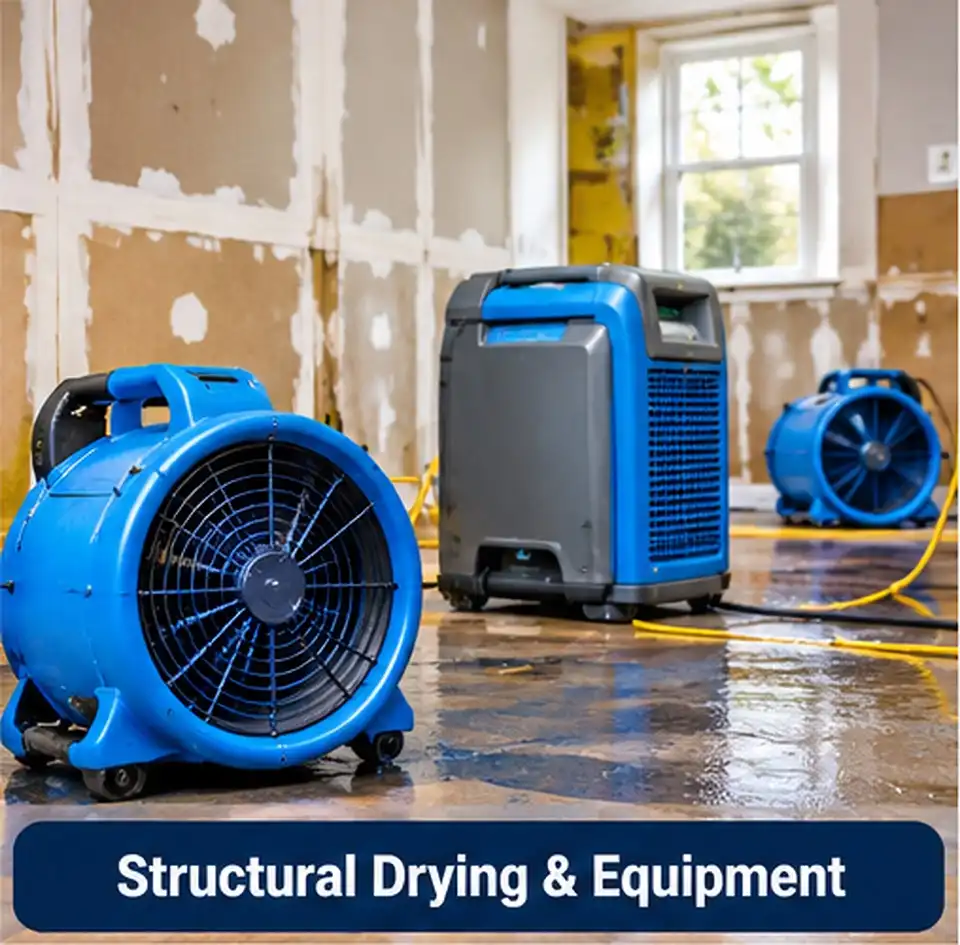
Structural Drying Timelines & Equipment Metrics
| Metric | Industry Target / Typical Range | Why It Matters |
|---|---|---|
| Typical drying time | 3 to 5 days for Class 1 and 2 | Longer drying raises mold risk |
| Class 4 drying time | 7 to 14+ days | Dense materials release water slowly |
| Indoor relative humidity goal | Below 50% during and after drying | Mold thrives above 60% RH |
| Wood framing moisture goal | Return to dry standard (often 12% to 15%) | Prevents warping and rot |
| Air movers | About 1 per 10 to 16 linear feet of wet wall | Pushes moisture off surfaces |
| Dehumidifiers (LGR) | Sized by cubic footage and class | Pulls evaporated moisture from the air |
| Moisture readings | Every 24 hours | Confirms progress, guides equipment changes |
| Temperature range | 70°F to 90°F for best evaporation | Warm air holds more moisture |
Our Standard Drying Setup
- Extract standing water with truck-mounted or portable units.
- Map moisture using pin meters, pinless meters, and thermal imaging cameras.
- Remove wet carpet pad and unsalvageable materials.
- Drill weep holes or remove baseboards to vent wall cavities.
- Position air movers at angles along affected walls.
- Install LGR dehumidifiers (low-grain refrigerant units that pull moisture from air even at lower humidity).
- Deploy injectidry systems for hardwood floors and cabinets when needed.
- Log daily readings and share them with you and your adjuster.
Pros and Cons of Extraction Methods
Truck-mounted extraction
- Pro: Strongest suction, removes the most water fast
- Pro: Ideal for large basements and whole-floor flooding
- Con: Requires hose access, less practical for high-rise units
Portable extraction
- Pro: Works in tight spaces, upper floors, and apartments
- Pro: Quick setup
- Con: Lower capacity on large losses
Weighted extraction (rover tools)
- Pro: Pulls deep water from carpet pad without removal
- Con: Only works on Category 1 water and salvageable carpet
If you’ve lived through a humid Topeka summer, this moisture containment protocol makes complete sense. August humidity in the Kansas River valley slows evaporation and pushes indoor RH up fast, so we close off affected rooms and run dehumidifiers in a closed drying chamber. Request a copy of the daily drying log from any contractor you hire.
Check Also: How Sewage Cleanup Overland Park Crews Protect Your Home From Structural Mold Damage
Materials Mitigation: Salvage vs. Replace Guidelines
Not everything wet has to go. Smart salvage decisions save you money and keep your insurance claim clean.
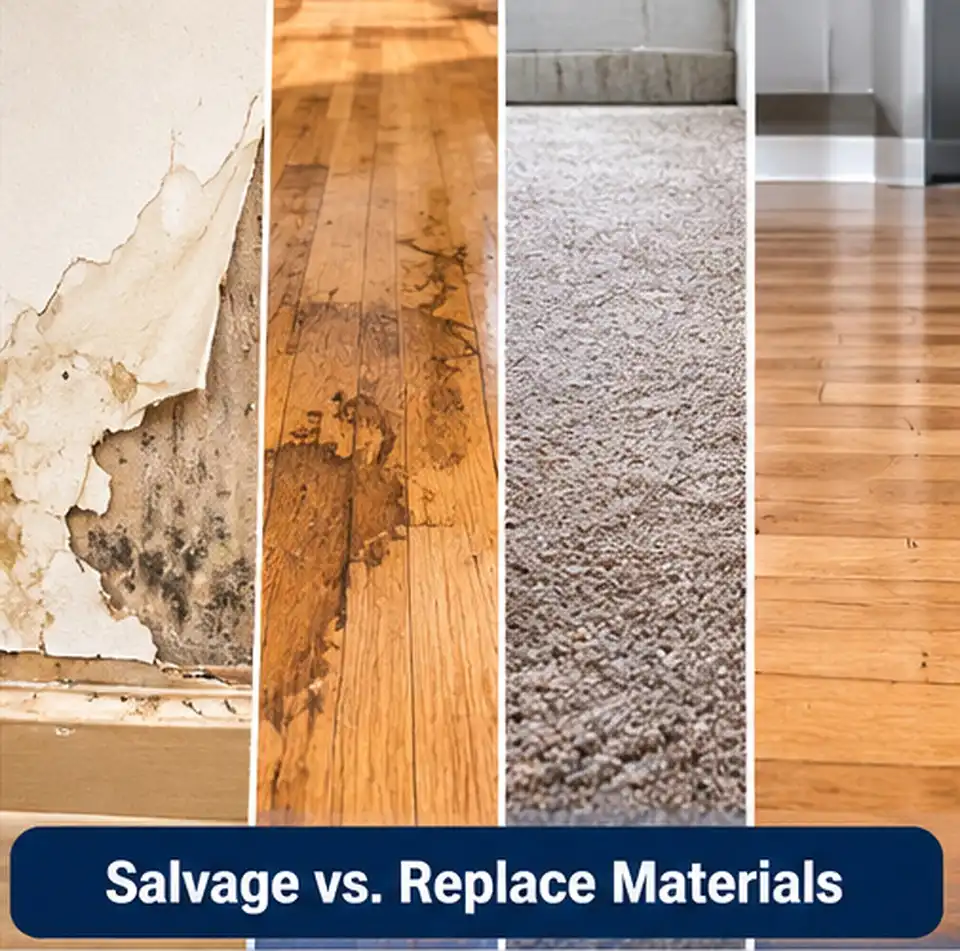
The deciding factors are water category, time wet, and material type.
Materials Mitigation: Salvage vs. Replace Guidelines
| Material | Category 1 (Under 48 Hours) | Category 2 | Category 3 |
|---|---|---|---|
| Carpet | Salvage, clean, dry | Salvage carpet in some cases, replace pad | Replace |
| Carpet pad | Often salvage | Replace | Replace |
| Drywall | Dry in place | Dry or cut depending on saturation | Flood cut and replace |
| Insulation (fiberglass) | Replace if compressed or soaked | Replace | Replace |
| Hardwood floors | Specialty drying, often salvageable | Assess for cupping | Usually replace |
| Laminate flooring | Usually replace (swells fast) | Replace | Replace |
| Plaster walls | Dry in place (slow) | Dry and treat | Remove affected sections |
| Solid wood furniture | Dry and refinish | Clean, disinfect, dry | Clean only if non-porous finish |
| Upholstered furniture | Professional cleaning | Often replace | Replace |
| Particleboard cabinets | Often replace | Replace | Replace |
| Documents and photos | Freeze-dry recovery possible | Freeze-dry | Limited recovery |
On recent emergency service calls in College Hill, we saved several solid oak floors with panel drying systems that would have been torn out by less experienced crews. Before anything gets thrown out, photograph it and list it for your adjuster.
Mold Prevention and Remediation
Mold starts growing within 24 to 48 hours on wet materials. According to the EPA’s guide to mold, moisture, and your home, the key to mold control is moisture control, and wet building materials should be dried within 24 to 48 hours to prevent growth. The EPA also notes that homeowners can often handle mold areas smaller than about 10 square feet, while larger areas call for professional help.
Warning Signs of Hidden Mold
- Musty, earthy odor in basements or closets
- Dark spots or fuzzy patches on drywall, baseboards, or ceiling corners
- Peeling paint or bubbling wallpaper
- Warped baseboards or soft drywall
- Allergy symptoms that improve when you leave the house
Mold Mitigation Checklist
- Fix the moisture source. Mold returns if the leak or humidity problem remains.
- Set up containment. We use 6-mil poly sheeting and zipper doors to seal the work area.
- Establish negative air pressure. HEPA air scrubbers vent filtered air outside to keep spores from spreading.
- Wear proper PPE. N-95 respirator at minimum, plus gloves and goggles.
- Remove porous moldy materials. Moldy drywall, insulation, and carpet get bagged and removed.
- HEPA-vacuum all surfaces. This captures settled spores.
- Clean and treat framing. Apply EPA-registered antimicrobials to structural wood.
- Dry the area completely. Confirm with moisture readings.
- Verify with clearance testing. Independent air sampling confirms the job is done.
Topeka Mold Risk by Season
| Season | Primary Risk | Prevention Step |
|---|---|---|
| Spring | Flash flooding, basement seepage | Test sump pump, clear gutters |
| Summer | High humidity above 60% | Run a basement dehumidifier set to 45% to 50% |
| Fall | Gutter overflow, foundation leaks | Extend downspouts 6+ feet from foundation |
| Winter | Condensation, slow leaks from frozen pipes | Insulate pipes, check attic for frost |
We follow the IICRC S520 standard (the industry’s mold remediation protocol) on every mold job. Buy a $15 hygrometer this week and check your basement humidity. If it reads above 60%, act now.
Check Also: Fire Damage Mitigation Shawnee: How Fast Action Stops Smoke, Soot, and Mold From Destroying Your Home
Sewage Remediation: Category 3 Cleanup Done Right
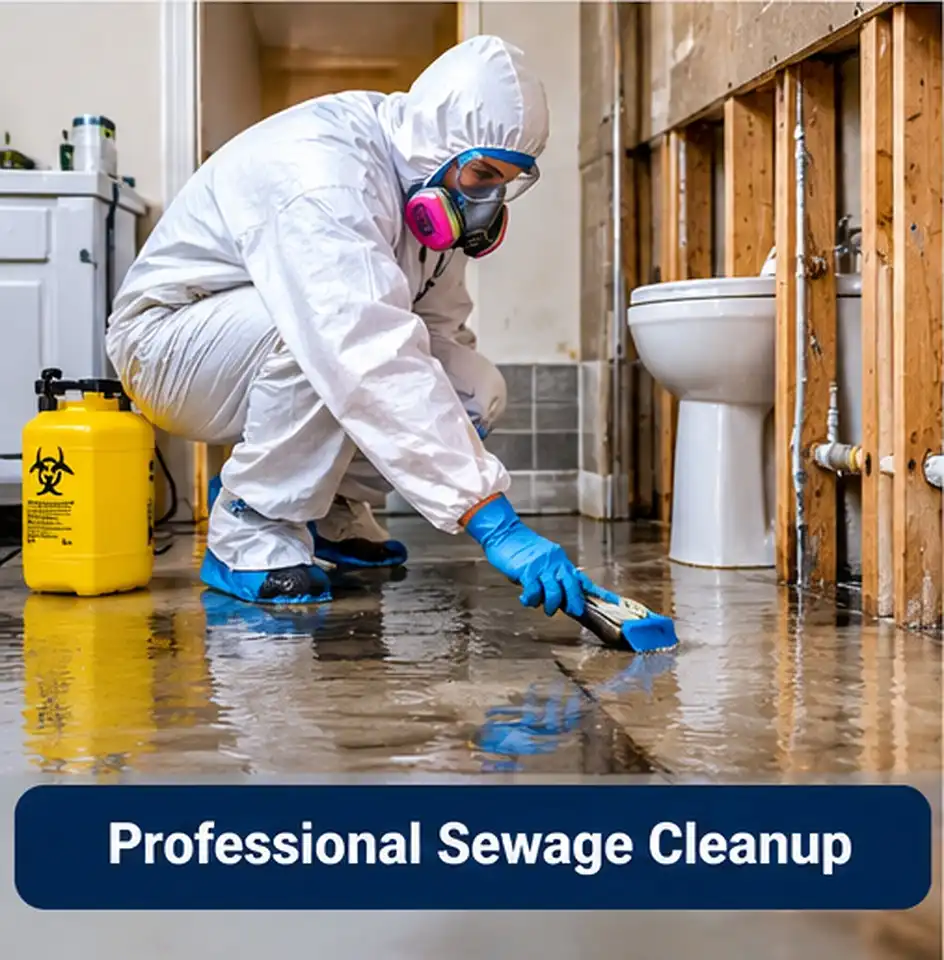
Sewage backup is a biohazard. Raw sewage carries E. coli, hepatitis A, and other pathogens. This is never a DIY job. Topeka’s older combined lines in neighborhoods like Potwin and Highland Park make backups more common during heavy spring storms.
Our Sewage Cleanup Protocol
- Isolate the area and keep children and pets out.
- Suit up in full PPE, including respirators.
- Extract contaminated water and solids.
- Remove porous materials (carpet, pad, drywall to at least 2 feet above the water line).
- Clean all surfaces with professional-grade disinfectants.
- Apply antimicrobial treatment to framing and concrete.
- Dry the structure with air movers and dehumidifiers.
- Deodorize with hydroxyl generators or thermal fogging.
- Document everything for insurance.
Common Sewage Backup Causes in Topeka
| Cause | Where We See It Most | Prevention |
|---|---|---|
| Tree root intrusion | Older neighborhoods with mature trees | Annual sewer line camera inspection |
| Municipal line overload | Low-lying areas during heavy rain | Install a backwater valve |
| Grease buildup | Kitchen drain lines | Never pour grease down drains |
| Collapsed clay pipes | Homes built before 1960 | Line replacement or pipe lining |
Call your insurer to ask about a sewer backup endorsement. Most standard homeowners policies exclude sewage backup unless you add it.
Burst Pipe Restoration: Topeka’s Winter Threat
Frozen pipes cause some of the costliest claims we handle. When water freezes, it expands and builds pressure inside the pipe. Pipes often split in unheated crawlspaces, exterior walls, and garages. Topeka winters regularly drop below 0°F during arctic blasts, and January cold snaps keep our crews busy around the clock.
Where Pipes Burst Most in Topeka Homes
- Exterior wall plumbing in kitchens and bathrooms
- Crawlspace supply lines without insulation
- Hose bibs left connected to garden hoses
- Attic lines in split-level and ranch homes
- Garage plumbing near laundry hookups
Burst Pipe Prevention Steps
- Insulate exposed pipes with foam sleeves.
- Disconnect garden hoses before the first freeze.
- Keep the thermostat at 55°F or higher, even when traveling.
- Open cabinet doors under sinks on exterior walls during cold snaps.
- Let faucets drip during subzero nights.
- Know your main shutoff location and test it twice a year.
What Happens After a Pipe Bursts
| Stage | Timeline | Our Action |
|---|---|---|
| Water release | Minutes | You shut off the main valve |
| Extraction | First 2 to 6 hours | Remove standing water |
| Leak access | Day 1 | Open walls or ceilings to reach the break |
| Drying | Days 1 to 5 | Air movers, dehumidifiers, cavity drying |
| Plumbing repair | Day 1 to 3 | Licensed plumber fixes the line |
| Rebuild | Week 1 to 3 | Drywall, paint, flooring replacement |
The good news: sudden pipe bursts are typically covered by standard homeowners policies. Gradual leaks usually are not. Walk through your home before the first hard freeze and wrap every exposed pipe you find.
Estimated Repair Costs in Topeka, KS

Repair costs depend on category, square footage, and materials. The ranges below reflect typical costs for residential water damage restoration Topeka KS homeowners encounter. Every job gets an itemized written estimate after inspection, and we bill using the same industry-standard pricing software most insurance carriers use.
Estimated Repair Costs in Topeka, KS
| Service | Typical Cost Range | Key Cost Drivers |
|---|---|---|
| Water extraction (Category 1) | $3 to $7 per sq ft | Square footage, standing water depth |
| Category 3 cleanup | $7 to $15+ per sq ft | Contamination, material removal |
| Small leak mitigation | $1,000 to $3,000 | Single room, quick response |
| Basement flood cleanup | $3,000 to $10,000+ | Finished vs. unfinished basement |
| Burst pipe restoration | $2,500 to $8,000 | Ceiling and wall damage, rebuild scope |
| Sewage remediation | $2,500 to $10,000+ | Volume, materials removed |
| Mold remediation | $1,500 to $9,000+ | Square footage, containment level |
| Drying equipment (per day) | $50 to $150 per unit | Air movers vs. dehumidifiers |
| Drywall replacement | $2 to $4 per sq ft | Texture matching, paint |
| Hardwood floor drying | $1,500 to $4,500 | Room size, cupping severity |
What Drives Costs Up
- Delayed response: water spreads and Category 1 turns into Category 3
- Finished basements: more drywall, carpet, and trim to remove
- Historic materials: plaster and original hardwood take longer to dry
- Mold growth: adds containment and remediation steps
- After-hours calls: some companies charge emergency premiums (we do not)
Quick action is your best cost control. A leak caught in 6 hours might cost $1,500 to mitigate, while the same leak found a week later can run five figures once mold and rebuild costs are included. Ask every contractor for an itemized estimate before work starts.
Insurance Claims: Protect Your Payout
Documentation decides your claim. Insurance adjusters need proof of cause, timing, and extent of damage. A strong file speeds approval and reduces disputes.
Know Your Coverage
| Damage Type | Standard Homeowners Policy | Separate Coverage Needed? |
|---|---|---|
| Sudden burst pipe | Usually covered | No |
| Appliance failure (sudden) | Usually covered | No |
| Gradual leaks | Usually excluded | Maintenance issue |
| Sewer backup | Usually excluded | Sewer backup endorsement |
| River or surface flooding | Excluded | Flood insurance |
| Mold | Limited or capped | Check your policy limits |
Flood damage from Shunga Creek overflow or Kansas River flooding needs separate flood coverage. The FEMA National Flood Insurance Program explains that standard homeowners policies do not cover flooding, and new NFIP policies typically carry a 30-day waiting period before coverage begins. Do not wait for the spring forecast to buy a policy.
Insurance Claim Steps
- Stop the water source and prevent further damage (your policy requires this).
- Photograph and video everything before cleanup begins.
- Call your insurance company to open a claim and get a claim number.
- Hire a certified restoration company for emergency mitigation.
- Keep damaged items until the adjuster sees them, or document them in detail.
- Save every receipt, including hotel stays and meals if you are displaced.
- Request moisture logs and drying reports from your contractor.
- Review the adjuster’s estimate line by line against your contractor’s.
- Ask questions about anything excluded or underpaid.
You have the right to choose your own contractor. Your insurer may suggest a preferred vendor, but the decision is yours. We work directly with all major carriers and share drying logs and photo reports with your adjuster. Find your policy’s declarations page today and confirm whether you have sewer backup and flood coverage.
Our Core Service Catalog
A full-service restoration company handles every step from extraction to rebuild. You can view details for each service on our water damage restoration Topeka KS services page. Here is what we provide:
| Service | What It Includes | Typical Use Case |
|---|---|---|
| 24/7 Emergency Water Extraction | Truck-mounted and portable extraction | Active flooding, standing water |
| Basement Flood Cleanup | Extraction, material removal, drying | Spring storms, sump pump failure |
| Structural Drying | Moisture mapping, air movers, LGR dehumidifiers | Walls, subfloors, framing |
| Mold Removal & Remediation | Containment, HEPA filtration, antimicrobials | Post-flood or humidity mold |
| Sewage Remediation | Category 3 cleanup, disinfection, deodorizing | Sewer backups, toilet overflows |
| Burst Pipe Restoration | Leak access, drying, rebuild coordination | Frozen pipe splits, supply line failure |
| Storm & Flood Damage Repair | Roof leak response, flood mitigation | Severe thunderstorms, flash floods |
| Content Cleaning & Pack-Out | Inventory, cleaning, storage | Furniture, documents, belongings |
| Insurance Claim Support | Documentation, adjuster coordination | All covered losses |
Our technicians hold IICRC certifications in water damage restoration (WRT), applied structural drying (ASD), and applied microbial remediation (AMRT). Ask any contractor you are considering to name their certifications before they start work.
Local Service Across Topeka Neighborhoods
Every Topeka neighborhood has its own water damage patterns. Home age, elevation, and soil type all affect what we find on service calls.

Here is what we see most often across our service area.
| Neighborhood / Area | Typical Home Profile | Most Common Water Issues |
|---|---|---|
| Westboro | 1920s to 1940s homes, plaster walls | Basement seepage, old cast iron drains, Class 4 drying |
| College Hill | Older homes, rentals near Washburn | Burst pipes, aging supply lines, hardwood damage |
| Potwin | Historic Victorian homes | Clay sewer line failures, plaster damage, foundation leaks |
| NOTO Arts District | Older commercial and mixed-use buildings | Roof leaks, river-area humidity, older plumbing |
| Highland Park | Mid-century homes | Sewer backups, basement flooding during storms |
| Sherwood | Newer suburban homes, finished basements | Sump pump failures, washing machine and water heater leaks |
| Tecumseh | Rural and suburban properties | Well system leaks, crawlspace moisture |
| Auburn | Rural homes, newer builds | Storm damage, roof leaks, frozen lines |
| Berryton | Acreages and rural homes | Crawlspace flooding, frozen exterior pipes |
Flood Risk Near Shunga Creek and the Kansas River
Homes near Shunga Creek face flash flood risk during intense spring and summer storms, when the creek rises fast. Properties in low areas near the Kansas River carry broader flood risk; Topeka’s history includes the major 1951 flood that reshaped how the city manages the river. We recommend these steps for homes in flood-prone areas:
- Install a battery backup on your sump pump
- Add a backwater valve to your main sewer line
- Store valuables on shelves at least 12 inches off the basement floor
- Check your FEMA flood zone and price a flood insurance policy
Our crews stage equipment across the metro, so water damage restoration Topeka KS residents in outlying areas like Berryton and Auburn get the same rapid response as homes downtown. Look up your property’s flood zone on FEMA’s flood map service before the next spring storm season.
How to Choose the Best Water Damage Restoration Company in Topeka
The right contractor protects your home and your claim. Choosing quickly under stress leads to mistakes. Use this checklist to find the best water damage restoration Topeka KS has to offer.
Contractor Vetting Checklist
- Confirm IICRC certification. Ask for technician certification numbers.
- Verify 24/7 availability. A real person should answer the phone, not voicemail.
- Ask about response time. Under 90 minutes is the standard to expect locally.
- Check insurance and licensing. Request proof of liability and workers’ comp coverage.
- Read local reviews. Look for detailed reviews that mention specific jobs and outcomes.
- Request itemized estimates. Avoid vague, lump-sum pricing.
- Confirm insurance billing experience. The company should work directly with adjusters.
- Ask about drying documentation. Daily moisture logs are a must.
Red Flags to Avoid
- Demanding full payment upfront before work begins
- Pressuring you to sign a contract on the spot
- No physical local address or local phone number
- Refusing to provide moisture readings or drying logs
- Out-of-state “storm chasers” who appear after big weather events
Reading Reviews the Smart Way
When you browse water damage restoration Topeka KS reviews, look past the star rating. Focus on reviews that mention response time, communication, insurance help, and cleanup quality. Check the Better Business Bureau listings for complaint history and how each company resolved issues. A company that responds professionally to a negative review often tells you more than ten five-star ratings.
Write down three local companies now and check their certifications before you ever need one.
FAQs
How fast should restoration start after water damage?
Restoration should start within the first few hours. Mold can begin growing in 24 to 48 hours, and Category 1 water degrades over time. The sooner extraction and drying start, the more materials you save.
How long does water damage restoration take?
Drying takes 3 to 5 days for most jobs. Class 4 losses involving hardwood, plaster, or concrete can take two weeks or longer. Rebuild work adds 1 to 3 weeks depending on scope.
Can I stay in my home during restoration?
You can often stay for Category 1 and 2 jobs. Category 3 sewage or extensive mold remediation may require temporary relocation. Your policy’s additional living expenses (ALE) coverage may pay for a hotel.
Does homeowners insurance cover water damage in Topeka?
Most policies cover sudden, accidental water damage like burst pipes. Floods and sewer backups usually require separate coverage. Review your declarations page to confirm.
Is DIY water cleanup ever safe?
DIY cleanup works for small Category 1 spills caught immediately. Anything involving contaminated water, wet walls, or large areas needs professional moisture detection and drying equipment.
Get 24/7 Help From Topeka’s Local Restoration Team
Water damage rewards fast action and punishes delay. Every hour of standing water raises your repair costs, your mold risk, and the chance of a disputed claim. Our crews provide water damage restoration Topeka KS homeowners can count on, with transparent pricing, IICRC-certified technicians, and jargon-free updates at every step.
When you need water damage restoration Topeka KS service, call us any time, day or night. Whether it is a frozen pipe in Sherwood, a sewer backup in Highland Park, or a flooded basement in Westboro, we arrive ready to extract, dry, and restore.
Save our number, locate your main water shutoff, and check your flood coverage today.